Zucchini and Carrot Side Dish

A perfect pairing of two vegetables! Zucchini is high in Vitamin B6,2,1 Vitamin C, A and minerals. While carrots carry the load in carotenoids with recent research also linking critical phytonutrients Falcarinol and Falcarindiol to inhibiting the growth of intestinal and colon cancer cells, making it a power house vegetable! Enjoy this wonderful side dish weekly or daily and see how you can improve your health.

Zucchini and Carrots maybe prepared together or separately. Maybe served over: Rice, Quinoa, Couscous, or Pasta.

Sliced Carrots and Zucchini for saute`

An easy side dish to prepare that takes little time to prepare and full of nutrients. Establish healthier individual standards and enjoy this dish served warm or cold. The recipe can be used for a”Zucchini” or “Carrot” only dish.

Ingredients

  • 2 Garlic Cloves minced
  • 1/4 cup olive oil
  • 3 Carrots, thinly sliced rounds
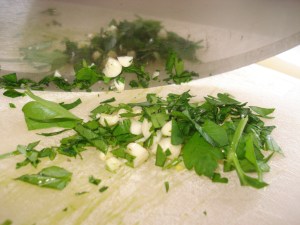
  • Chopped Garlic and Parsley

  • 3 Zucchini, thinly sliced rounds
  • 1/2 tsp salt
  • 1 Tbsp Fresh Parsley chopped

Saute vegetables in pan

Directions:

Place skillet on low-heat, add olive oil and garlic, allow to heat for 4 minutes. Add in sliced carrots and saute` for 4 minutes. Place Zucchini into skillet and add salt. Using a wooden spoon integrate vegetables together, simmering for about 5 minutes.  Add parsley into carrots and zucchini.

By: Kim Crocker-Scardicchio

Research:

Nutrition to lower LDL, increase HDL Cholesterol

Cholesterol Reducing Foods

Plenty of fruits, vegetables, whole grains, and extra virgin olive oil are heart healthy and can be utilized to reduce cholesterol. By changing the way you eat total cholesterol can be reduced by 5 to 10 percent. Eat foods in which the skins can be consumed too. Consider the importance of monounsaturated fats like nuts and certain oils (replacing saturated fats all animal products: ice cream, butter, dressings.)

The soluble fiber found in fruits and veggies reduces absorption of cholesterol in your intestines, then binds bile (which contains cholesterol) and dietary cholesterol so that the body excretes it.

FRUIT 4 servings/day Great for Reduction: apples, prunes, pears, plum, apricots. Choose fruits whose skin can be eaten. Fruits with membranes or seeds are also helpful: oranges, grapefruit, pomegranates.
VEGGIES 5 servings/day Great for Reduction: Any leafy green, introducing roughage into the diet: broccoli, rapini, kale, collard greens, spinach, lettuce. Other helpful vegetables: avocado, garlic, beans. Soluble fiber.

WHOLE GRAINS 7-8 serving /day (1 serving size is 1 ounce) also Barley and Oats, Bran, Flaxseed!!! Soluble fiber.
Fish, Lean Meat, Poultry 2 servings/day. 3-4 ounces per serving (Eat more Fish which contains healthy omega 3 and 6 oils.)
Nuts about 1 tbsp 4 times a week. Walnuts, Almonds. (Monounsaturated fats.)
OILS 3 tbsp per day Extra Virgin Olive Oil is a monounsaturated fat and contributes to raising HDL (healthy cholesterol) and causes LDL cholesterol to be reduced.
Water 8 glasses / day

REDUCE LDL (Lousy Cholesterol)

The best way to reduce LDL and triglyceride levels is through Aerobic Exercise. By doing so you are telling your body what to do with the extra calories and creating healthy blood flow in your blody. This can be done by swimming, walking, jogging, rollerbladding. The idea is to move cholesterol deposits by increasing your heart rate, which will in turn cause blood vessels to dialate and blood to push through the body.

Reduce bread servings to 6 servings a day and alcohol consumption to every other day can both play a factor in reducing triglyceride levels.

Increase HDL (Healthy Cholesterol)

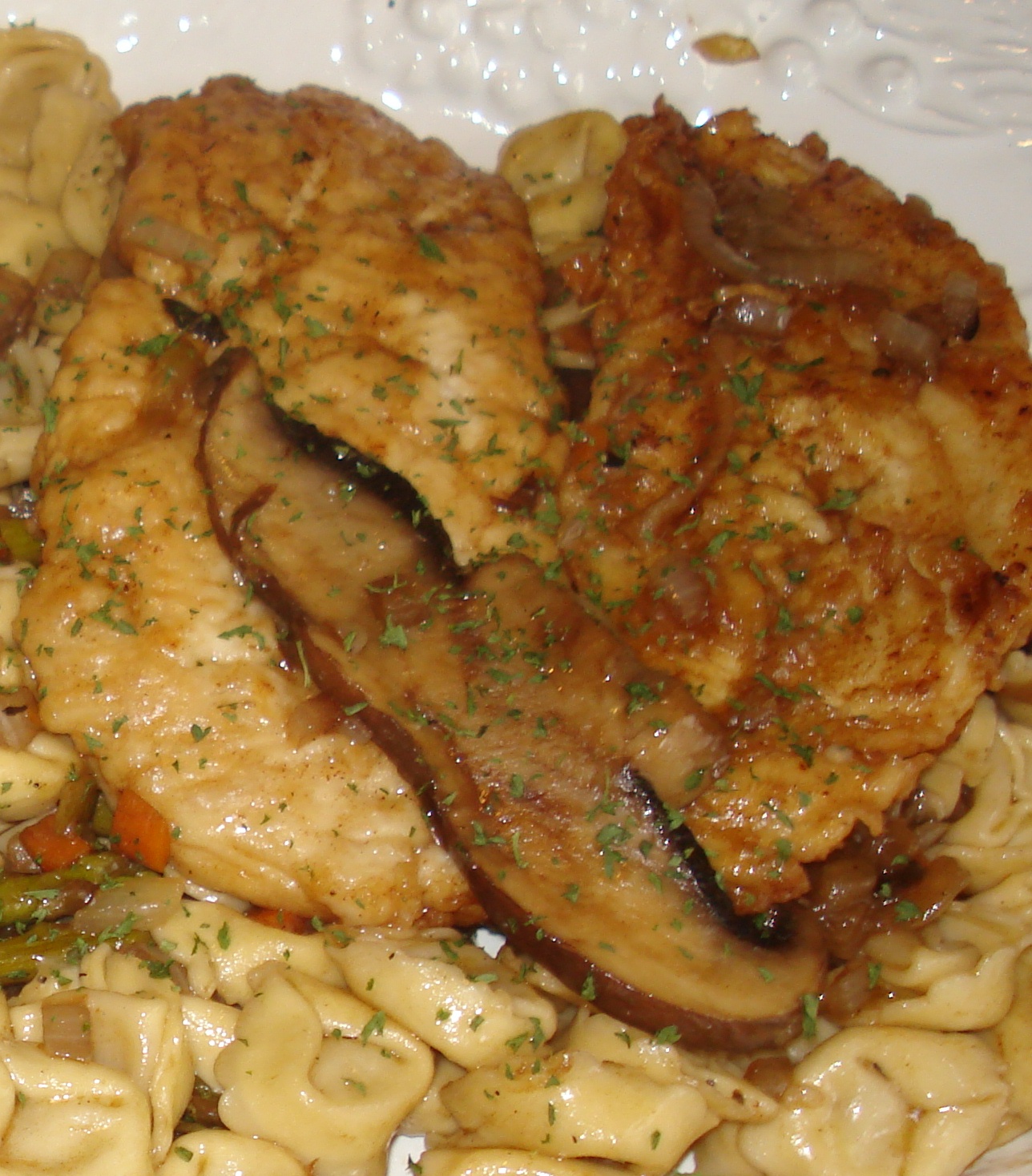
Food choices also play a critical part in reducing LDL and increasing HDL including substituting new flavors for old preferences; replacing dressing with extra virgin olive oil, seeds and pepper to your salads, providing your vessels with the necessary elasticity that they need (healthy mono and poly unsaturated fats.) Since oils are are fluid at room temperature  they will not clot your arteries the way that saturated fats found in butters and dressings will. Pan fried chicken with a small amount of canola oil, then turned in garlic, Marsala, seasoned with spices introduces potassium, and vasoldilators allicin and a touch of alcohol to open vessels and allow nutrients to function and remove unwanted blockage.

Its your body, Know the Healing Power of Food and make choices to improve your health for a living a longer and stronger life.  

By: Kimberly Crocker

For more information:

http://www.mayoclinic.com/health/cholesterol/CL00002

http://www.bddiabetes.com/us/main.aspx?cat=1&id=496

Sodium Benefit’s & Limit’s

Do you crave salt or sugar?

Have you noticed that your tastes may vary, craving salty or sweet foods in different moments of the day? Years of gathered research from studies done on infant’s to adult’s show that salt  is both a preference and a requirement.  The same research proved that we have a craving for sweet tasting food’s driven by a gene which promotes the need for fruit and vegetables.

“It is worth one’s salt” to understand sodium’s importance in maintaining the health of  the body and the difference between:

  • Salt and sodium
  • Salts benefit’s and limit’s
  • How to interpret our blood pressure numbers
  • Foods reducing Sodium level’s

Difference between Salt and Sodium

While sodium and salt are words that are  often interchangeable the difference is determined between the name of the mineral and the function of one of its element’s.   Salt, also known as sodium chloride  (NaCl) is made up of  two elements: 40% sodium (Na) and 60% chloride (Cl).  1/4 teaspoon of salt contains 600 milligrams of sodium (Na).  The body requires no more that 2300 milligrams of sodium per day, or 1 teaspoon of salt a day.

Sea Salt and Table Salt have the same amount of sodium. Sea salt is produced from the evaporation of sea water, while table salt is: mined, ground and has iodide added to the grains. (which lacks in sea salt).

Salt’s Benefit’s and Limit’s

Briefly stated, the benefits of sodium are found in: sweating, transporting nutrient’s from head to foot, transmitting nerve impulses (250-500 mg sodium just for neurological & psychological function’s) and contracting muscles such as your heart.

Equally important are the limit’s that sodium imposes; when the kidney has an excess of sodium it releases water which then  increases the blood volume.  As the blood level increases, it’s flow within the body also increases the blood pressure.  The heart will in turn work harder to pump blood which in creates instability within the blood vessel’s and creates a risk for heart problems, or a stroke. A great argument for limiting daily salt intake. Limit sodium intake to 1500 mg Na per day (1/2 tsp salt) For those: over age 51, have diabetes, high blood pressure or chronic kidney disease.

Interpreting Blood Pressure Number’s

A Doctor’s appointment will prove valuable  in evaluating an individual’s blood pressure.  As adult’s age systolic blood pressure  increases by four points per decade. The systolic number is the first number documented in a blood pressure reading 120/80. 120 mm Hg (millimeters of mercury) indicates  the maximum arterial pressure  during a contraction of the left ventricle of the heart contracts. It is advised to not exceed the maximum pressure of 120 so as to not force the heart to work harder in pumping the necessary blood that the body requires. While the diastolic, second number “80”mm Hg, represents the pressure when the heart is resting between beats.

  • Rating                                         Systolic                Diastolic
  • Optimal                                      <100                     <80
  • Normal                                      < 130                     <85
  • High Normal                                 135-139                  85-89
  • Hypertension Stage 1                   140-159                  90-99
  • Hypertension Stage 2                  160-179                 100-109
  • Hypertension Stage 3                  >179+                  >109

Symbols:
Less than <
Greater than >

Eat Food High in Potassium to Reduce Sodium Levels 

If no other health problem’s are present, keeping blood pressure within normal level’s can be achieved through simple changes at mealtime. Daily drink 6-8 glasses of water and chew on food with higher amounts of Potassium  (K)  which will push unnecessary amounts of Na from the body. An individual needs to consume only 4700 mg K per day to keep the mechanic’s of the body in optimal condition. While all fruits and vegetables will have Potassium the following have higher amounts, choose any 2-3 per meal:

  • 1 Sweet Potato or  1 Baked Potato
  • 8 oz Yogurt
  • 4 Prunes 0r 1 Banana
  • 1/2 c diced Tomato or 1/2 c. chopped Spinach
  • 1/2 c. White or  Lima or 1 Tbsp Soy bean’s
  • 3 ounces Clams, Halibut, Cod or Tuna Fish
If  blood pressure falls into the hypertension category foods to immediately avoid: Carrots, Celery, Spinach, Beets and remove the Water Softner.

 4  Effective Changes to Reduce Sodium when Preparing, or Seasoning Meals:

  •  When purchasing prepackaged foods READ the FOOD LABEL make sure that the Potassium values are higher than the sodium values.
  • Throw out bottled: seasoning’s, garlic and onion powder’s
  • Reduce salt by 1/2 of normal use
  • Incorporate 1 Tablespoon freshly chopped herbs, 1/2 tsp lemon zest, 1/4 tsp cracked black pepper, a minced garlic clove and/2  onion for flavoring foods.   Herbs and Spices to Replace the Salt Shaker

By: Kimberly Crocker

References

Reducing Triglycerides and Cholesterol

FOLLOW UP WITH: Cholesterol and Triglyceride Reducing Foods

Understanding Triglycerides in the correct amount   The body needs a supply of two types of  lipids/fats that circulate in our blood stream: triglycerides and cholesterol. Triglycerides are made in the liver and stored in fat cells, playing a key role in energy for muscle function. While this article in brief, takes a closer look at triglycerides it is equally important to keep its partner in mind, cholesterol, which is key for muscle cell membrane and making of hormone’s.  The liver builds triglycerides by using a glucose (sugar) with three fatty acids attached to it, however they can be made without food consumption as well.  After triglycerides are built, they can be stored in the liver, or sent to and stored within muscles.

     Three functions, of triglycerides are:
  1. Energy for all parts of the body.
  2. Insulation to help keep the body in homeostasis (balance of temperature).
  3. Provide adequate nutrition when we are sick, delivering fat vitamins (K, A, D, E).

How it works:  The liver creates triglycerides as stored energy. When energy levels become low, the hormone glucagon orders the fatty acids to be broken off of the sugar base. The sugar and fatty acids can both then enter energy production cycles

Cause and Effect:  The calorie is a measurement of heat energy. Carbohydrates and proteins contain only 4 calories per gram. Fats contain 9 calories per gram, thus providing the body with more than twice the amount of energy as sugars and proteins.  Triglycerides are the most concentrated form of energy found within the body, producing more than twice the amount of energy per gram than other forms of energy (protein and carbohydrates), which is why the body can store large amounts of triglycerides.

Clearing up the confusion:  Keep in mind that triglycerides are stored in fat cells and some muscle cells. While your body prefers to use fat as the main energy source, it should represent less than 30 percent of your diet. High-fat diets leave you at risk of obesity.  Your blood value must be <150 (less than 150).  More than 150 puts an individual at risk.

Fish, fruits, vegetables promote HDL Cholesterol to reduce LDL Cholesterol

An excess of triglycerides causes fat buildup in the liver and around the muscles, causing an increase in body fat percentage. Triglycerides are the most common type of fat found in your body and blood plasma. The body absorbs and uses all the energy consumed from food eaten throughout the day, getting rid of anything it cannot use turning it into triglycerides, storing them in your fat deposits.  As a body takes in more food than it can store, the unused food is stored as triglycerides in lipid cells, the more that this happens, the bigger the risk for the build up in the system, placing the individual at risk for diabetes, strokes and heat attacks.

Foods to eliminate in dietary intake in order to reduce triglyceride levels are:  Alcohol, Dairy, Pork, White Breads, Reduce Red Meat to 3 ounces twice a week.  

Read More: Remove Alcohol For Quick Weight Loss 

Food Pyramid for improved Health

Include these foods for improved Triglycerides Cholesterol and Triglyceride Reducing Foods and learn more about how to balance your meals by following Dietary Serving Guidelines . Increase Fish: Salmon, Anchovies, Sardines, Herring, Mackerel intake 4 times a week to improve quality of Omega 3 (healthy fat) and protein. By introducing fish into your lifestyle, the body responds to a fat that is easier to break down with protein that the organs need in order to have improved function. For fiber include 4 servings of Fruit and 5-7 servings of vegetables a day. Quality of vitamins and minerals is critical to a reduction of unwanted food that would otherwise by stored as triglycerides in fat (lipid) cells.  By doing so you can keep your HDL Cholesterol >70, the LDL Cholesterol <120 and Triglycerides <150.

Recipes to include in your diet

Tuna Steak

Roasted Pepper and Carrot Soup

Lemon Infused Chicken or Fish

Written by:  Kim Crocker Scardicchio

Pomegranate Health Benefits

Pomegranate Seeds NutritionThe pomegranate fruit is obtained from a tree  that is originally native to the Southwest Asia and is cultivated since centuries together. Pomegranate is widely cultivated throughout the Afghanistan, Iran, Azerbaijan, Armenia, Turkey, East Indies, Malaysia, tropical Africa and southeast Asia. Later on, it was also introduced to the US and Latin America. The fruit is typically available from November to February (in the northern hemisphere), while in southern hemisphere, it seasons from March to May. There are more than 750 species that are observed and cultivated all over the world for various purposes from eating to forming pomegranate juice.  The name pomegranate literally means “the apple with many seeds”. The number of seeds in a single fruit varies from 300-1000.

Pomegranate tree can live up to many years, which is an advantage for the pomegranate growers. This way, it enhances the outdoor decoration of the house with additional fruits provided. The fruit of pomegranate is ruby colored with many seeds that are both juicy and citrus in flavor. Pomegranate seeds nutrition facts are just numerous and therefore, pomegranate seeds are used for many purposes from ancient times.

Health Benefits of Pomegranate Seeds
Often called as super fruit, the invaluable pomegranate seeds are loaded with numerous antioxidant properties that are said to be three times higher than the green tea. As we know, antioxidants are very important to control the free radicals from the body that can cause several troubles to the body. Antioxidants also maintain and repair the damaged body cells.  Pomegranate is high in vitamin C, vitamin A, folic acid, vitamin E , fiber, potassium, iron and calcium.

This ‘magic fruit’ is a bliss for the heart health, as regular intake of pomegranate seeds or pomegranate juice promotes:
Cardio health and reduces risk of strokes and heart attacks.
Contributes to proper thinning of the blood, reduce blood pressure levels, increase blood flow towards heart.                 Maintains good cholesterol levels (so that HDL cholesterol is elevated) and reduces arterial plaques.
Reduces symptoms of:
Anemia (add 1 tsp of cinnamon & honey to 1 cup of 100 % Pomegranate Juice)
Arthritis
Osteoporosis
Skin allergies
Skin disorders
Urinary tract infections
Wheezing linked to asthma
Sore throats
Tapeworms
Digestive disorders
Blood impurities
Anemia
Diabetes
Read on for health benefits of pomegranate juice.

Researchers are carefully observing the effects of pomegranate juice and prostate cancer as well as skin cancer. There are numerous products that are used by the pomegranate seeds including: pomegranate seed oil , pomegranate dietary supplements, pomegranate extracts and pomegranate concentrated juice.

Due to the polyphenols (anti oxidant) within this wonderful fruit it’s nutrition promotes anti inflammatory effects which strengthens the immune system, wound repair and reduces skin wrinkling making it’s derivites the most sought after when addressing skin remedies.

Eat, Drink and Enjoy!

RECIPE

Pomegranate Apple Salad

Red seeds from a Pomegranate
1 Apple diced (remove core)
1/4 c. Feta Cheese crumbled (optional)
Lettuce Leaves: Endive, Rucula  (Arugula), Spinach, Green Leaf Lettuce. Tear into bite size.
Dressing
1/3 c Extra Virgin Olive Oil
2 Tbsp Balsamic Vinegar
1/2 tsp salt
1/8 tsp pepper
1 Tbsp Parmesan Cheese grated

Wash Pomegranate, Apple and Lettuce leaves. Over a salad bowl cut Pomegranate into quarter pieces, invert each piece so that the skin is push inward and the seeds com outward. Seeds will easily come out. Make sure to remove white pith that the seeds are attached to, discard pith. Cut apple in half, remove and discard seeds. Cut apple into chunks place into bowl. Add feta cheese and lettuce into salad to salad bowl.
Toss well so that all ingredients are incorporated.

Place all Dressing ingredients into a bottle or bowl, cover tightly, shake ingredients so that they are well combined. Pour dressing onto salad 5-10 minutes before serving.