“Going Banana’s”

The Bountiful Benefits of Banana’s are known to those of us who’ve studied dietetics.  Upon receiving this well put together piece of information, I knew I had to pass it on to the readers of “EAT KNOW HOW”. Thank You to the Psychology Professor at CCNY for giving such a fun and informative article.

“A professor at CCNY for a physiological psych class told his class about bananas.  He said the expression “going bananas” is from the effects of bananas on the brain.”  Read on:

Never, put your banana in the refrigerator!!!
This is interesting.
After reading this, you’ll never look at a banana in the same way again.

Bananas contain three natural sugars – sucrose, fructose and glucose combined with 6 grams of fiber. A banana gives an instant, sustained and substantial boost of energy.

Research has proven that just two bananas provide enough energy for a strenuous 90-minute workout. No wonder the banana is the number one fruit with the world’s leading athletes.

But energy isn’t the only way a banana can help us keep fit. It can also help overcome or prevent a substantial number of illnesses and conditions, making it a must to add to our daily diet.

Depression: According to a recent survey undertaken by MIND amongst people suffering from depression, many felt much better after eating a banana. This is because bananas contain 20.2 mg of tryptophan, a type of protein that the body converts into serotonin, known to make you relax, improve your mood and generally make you feel happier.

PMS: Forget the pills – eat a banana. The vitamin B6 it contains regulates blood glucose levels, which can affect your mood.

Anemia : High in iron, bananas can stimulate the production of hemoglobin in the blood and so helps in cases of anemia.

Blood Pressure: This unique tropical fruit is extremely high in potassium yet low in salt, making it perfect to beat blood pressure. So much so, the US Food and Drug Administration has just allowed the banana industry to make official claims for the fruit’s ability to reduce the risk of blood pressure and stroke.

Brain Power: 200 students at a Twickenham (Middlesex) school ( England ) were helped through their exams this year by eating bananas at breakfast, break, and lunch in a bid to boost their brain power. Research has shown that the potassium-packed fruit can assist learning by making pupils more alert.

Constipation: High in fiber, including bananas in the diet can help restore normal bowel action, helping to overcome the problem without resorting to laxatives.

Hangovers: One of the quickest ways of curing a hangover is to make a banana milkshake, sweetened with honey.. The banana calms the stomach and, with the help of the honey, builds up depleted blood sugar levels, while the milk soothes and re-hydrates your system.
< BR>
Heartburn: Bananas have a natural antacid effect in the body, so if you suffer from heartburn, try eating a banana for soothing relief.  

Morning Sickness: Snacking on bananas between meals helps to keep blood sugar levels up and avoid morning sickness.

Mosquito bites: Before reaching for the insect bite cream, try rubbing the affected area with the inside of a banana skin. Many people find it amazingly successful at reducing swelling and irritation.

Nerves: Bananas are high in B vitamins that help calm the nervous system. 
 

Overweight and at work? Studies at the Institute of Psychology in Austria found pressure at work leads to gorging on comfort food like chocolate and chips. Looking at 5,000 hospital patients, researchers found the most obese were more likely to be in high-pressure jobs. The report concluded that, to avoid panic-induced food cravings, we need to control our blood sugar levels by snacking on high carbohydrate foods every two hours to keep levels steady.

Ulcers: The banana is used as the dietary food against intestinal disorders because of its soft texture and smoothness. It is the only raw fruit that can be eaten without distress in over-chronicler cases. It also neutralizes over-acidity and reduces irritation by coating the lining of the stomach.

Temperature control: Many other cultures see bananas as a “cooling” fruit that can lower both the physical and emotional temperature of expectant mothers. In Thailand , for example, pregnant women eat bananas to ensure their baby is born with a cool temperature.  

Seasonal Affective Disorder (SAD): Bananas can help SAD sufferers because they contain the natural mood enhancer tryptophan.

Smoking &Tobacco Use: Bananas can also help people trying to give up smoking. The B6, B12 they contain, as well as the potassium and magnesium found in them, help the body recover from the effects of nicotine withdrawal.

Stress: Potassium is a vital mineral, which helps normalize the heartbeat, sends oxygen to the brain and regulates your body’s water balance. When we are stressed, our metabolic rate rises, thereby reducing our potassium levels. These can be rebalanced with the help of a high-potassium banana snack.

Strokes: According to research in The New England Journal of Medicine, eating bananas as part of a regular diet can cut the risk of death by strokes by as much as 40%!

Warts: Those keen on natural alternatives swear that if you want to kill off a wart, take a piece of banana skin and place it on the wart, with the yellow side out. Carefully hold the skin in place with a plaster or surgical tape!


So, a banana really is a natural remedy for many ills. When you compare it to an apple, it has four times the protein, twice the carbohydrate, three times the phosphorus, five times the vitamin A and iron, and twice the other vitamins and minerals. It is also rich in potassium and is one of the best value foods around So maybe its time to change that well-known phrase so that we say, “A banana a day keeps the doctor away!”


PS: Bananas must be the reason monkeys are so happy all the time! I will add one here; want a quick shine on our shoes?? Take the INSIDE of the banana skin, and rub directly on the shoe…polish with dry cloth. Amazing fruit !!!  

http://www.nutritiondata.com/facts-C00001-01c20Tm.html

Diverticulitis and Diverticulosis Diet Tips

 
Diverticula are small pouches in the wall of the digestive tract. They occur when the inner layer of the digestive tract bulges through weak spots in the outer layer. (This is similar to what happens when an inner tube bulges through a tire.) People who have these pouches are said to have diverticulosis. Sometimes one or more of these pouches becomes inflamed or infected, a condition called diverticulitis. Some people with diverticulosis become aware of the condition only when diverticulitis occurs.
Diverticulosis is a very common condition in the United States.
Diverticulosis is more common in developed or industrialized countries, such as the United States, England, and Australia, where the typical diet is low in fiber and high in highly processed carbohydrates, diverticulosis is common. Diverticulosis first appeared in the United States in about 1900. This was the same time that processed foods were first introduced into the US diet.
Diverticulosis is much less common in countries of Asia and Africa, where the typical diet is high in fiber. (For more information on diverticulitis, check with the Mayo Clinic at http://www.mayoclinic.com/health/diverticulitis-diet/HQ00548)

Most people recover from diverticulitis without problems if they receive appropriate treatment. Diverticulosis and diverticulitis can be prevented by changes in lifestyle and habits.

Diverticulosis is thought to be caused by increased pressure on the intestinal wall from inside the intestine. As the body ages, the outer layer of the intestinal wall thickens. This causes the open space inside the intestine to narrow. Stool (feces) moves more slowly through the colon, increasing the pressure. Hard stools, such as those produced by a diet low in fiber or slower stool “transit time” through the colon, can further increase pressure. Frequent, repeated straining during bowel movements also increases pressure and contributes to formation of diverticula.
Diverticulosis in developed countries is blamed largely on the typical diet, which is low in fiber. For more information on Diverticulosis.

Diet Plan for Diverticulitis

  1. Grains
    enriched refined white bread, buns, bagels, english muffins
    plain cereals e.g. Cheerios, Cornflakes, Cream of Wheat, Rice Krispies, Special K
    arrowroot cookies, tea biscuits, soda crackers, plain melba toast
    white rice, refined pasta and noodles
    avoid whole grains as the seeds can get add to the inflammation within the intestine.
  2. Fruits:
    fruit juices except prune juice
    applesauce, apricots, banana (1/2), cantaloupe, canned fruit cocktail, grapes, honeydew melon, peaches, watermelon
    avoid raw and dried fruits, raisins and berries.
  3. Vegetables:
    Vegetable Juices
    Potatoes no skin
    beets, green/yellow beans, carrots, celery, cucumber, eggplant, lettuce, mushrooms, green/red peppers, potatoes (peeled), squash, zucchini
    avoid vegetables from the cruciferous family such as broccoli, cauliflower, brussels sprouts, cabbage, kale, Swiss chard etc
  4. Meat and Protein Choice:
    Well done, tender meat (lean), fish (wild caught) high in Omega 3 which will reduce inflammation within intestine. eggs
    Avoid beans & lentils
    Avoid all nuts and seeds, as well as foods that may contain seeds (such as yogurt)
  5. Dairy
    Two servings per day skim or 1% milk
  6. FATS
    Avoid saturated fats such as butter, margarine, Trans Fats, mealt high in fat content.
    MCT oil is most gentle on the intestine. You can also try plant oils. Extra Virgin Olive Oil, canola, avocado and peanut oils.

By: K. Crocker

Meal Plan, Which Calories do you Reduce?

Design your 1300-2000 Calorie Meal Plan…Cut calories and stay healthy!  Eat 5 meals a day and drink Water both with and between all meals!  Fluids are equally important to a successful diet. Add 1-2 glasses of water with 1/2 to 1 whole lemon each day. Also drink 1-2 cups of Oolong tea each day. Oolong tea burns over 157% more fat than Green Tea and has become the most popular tea designed to accelerate weigh loss. 
Typical 2000 Calorie recommended Meal Plan

Breakfast
Aunt Millies Bread** (whole/multi-grain) or Oatmeal, fruit, 1% or skim milk, 1 tsp healthy fat (Olio butter)

Snack
fruit, 1 bread (2 graham crackers)

Lunch
3 ounce fish or lean meat,  2 slices of (bread whole or multi-grain),  salad with 1-2 vegetables Salt/Fat free dressing, bread,  fruit

Snack
Vegetable,  Nuts 1 oz (optional protein)

Dinner
3 ounce fish or lean meat, 2 vegetables, fruit, pasta/rice (bread),  skim milk, 1 oz no fat cheese (milk),  low fat dessert, Healthy Fat used for cooking i.e. Extra Virgin Olive Oil

**Bread: Recommend Aunt Millies Bread 2  slices is only 1 serving and 80 Calories and will save 200 calories on this Meal Plan!

Recommended Daily Servings

 4 Fruits- 240 calories,

6 Vegetables- 290 Calories,

5 servings Bread -200 calories,

3 Milk/Dairy -300 Calories,

2 Meats or Fish -600 Calories,

3 Fats -360 calories.   

 NEW Total: 1350 Nutritional Calories

Meal Plan with reduced caloric intake

May reduce Calories by Removing:  

Any 3 Bread servings 160 calories,

1 Meat serving 300 calories,

1 Fat Serving 120 calories,

1 Milk/Dairy 100 calories.

Total removed Calories  -640. 

Great Link to Check out for additional help. http://www.montana.edu/health/nutrition/healthyway.html

Women and Hair Loss

For more great articles visit: www.cincychic.com 

Cartoon images of a mother at mid-day with her hair frazzled or falling all around her is closer to reality than most moms would like to admit. Although little is known about nutritional factors and hair-loss, studies have revealed “hair shedding” is commonly linked to women and is associated with: protein-energy malnutrition, hypothyroidism, starvation, eating disorders, stress, or a form of Alopecia (balding, that needs to be under a physicians care).

Hair shedding in women is generally a reflection of the individuals nutrition status. Several studies have examined the relationship between iron deficiency and hair loss. As noted by The Cleveland Clinic Foundation, “We believe that treatment for hair loss is enhanced when iron deficiency, with or without anemia, is treated. Iron deficiency anemia should be treated. Treating iron deficiency without anemia is controversial. Treatment of nutritional iron deficiency anemia includes adequate dietary intake and oral iron supplementation. Excessive iron supplementation can cause iron overload and should be avoided. ” 1 (J Am Acad Dermatol.)

Researchers as recently as 40 years ago, demonstrated the importance of iron supplements in nonanaemic, iron-deficient women with hair loss. Additionally, serum ferritin concentrations provide a good assessment of an individual’s iron status and seem to be a factor in female hair loss. Furthermore, the role of the essential amino acid, l-lysine (protein) in hair loss also appears to be important. Double-blind data confirmed the findings of an open study in women with increased hair shedding, where a significant proportion of women responded to l-lysine and iron therapy”.  2 (Clin Exp Dermatol.) One should be warned that excessive intakes of nutritional supplements may actually cause hair loss and are not recommended in the absence of a proven deficiency.

The most effective way to get healthy hair is to have a healthy diet. Components of the hair follicle, shaft and scalp require certain foods that make your hair healthy and strong. Studies show that by incorporating foods in your day-to-day diet from the following groups you could notice a difference in your hair within a few weeks.

Eating a healthy, well-balanced diet is important for healthy hair.

Water: One-fourth of the weight, of a strand of hair, is made up of water. Water makes your hair supple and soft therefore you should have enough water. Do not wait till you are thirsty keep drinking water. If you thirsty it means that you have lost water and your body is asking you to replenish the loss. Water keeps your hair silky and shiny as well.
Protein: A diet for healthy hair should be rich in protein as hair consists of primarily protein. Proteins will give your hair more strength and will prevent it from breaking and splitting. Eat protein rich foods like eggs (The Egg! A complete Protein!), fish, meat, milk, cheese and cereals. For additional Protein Tips go to: Depressed? Food for Thought: Natural Mood Enhancers
Minerals: A variety of minerals are important for healthy hair. Iron carries oxygen to the hair. Insufficient iron will starve the hair follicles of oxygen. Include red meat and dark green vegetable in your diet, as well as, fresh vegetables, nuts and seeds.
Vitamins: Vitamin A makes your scalp healthy and is good for your skin as well. Is associated with orange fruits and vegetables. Vitamin B and C for hair growth. Include these vitamins in your diet to avoid hair from splitting.
Exercise: Along with a healthy diet it is important that you exercise so that proper blood flow to your scalp and will help in the growth of hair.

Protein: Is found in meat, fish, poultry, milk, eggs, cheese, yogurt, sunflower seeds etc.
Vitamin A: Is found in eggs, milk, carrots, tomatoes, oily fish, dark green leafy vegetables, apricots etc.
Vitamin B: Found in milk, eggs, wholegrain cereals, bread, wheat germs, nuts, soy beans, poultry, fish, meat etc.
Vitamin D: Sunlight, fish liver oils, oily fish, milk and eggs etc.
Vitamin C: Found in bright colored fruits and vegetables: blackcurrant, green peppers, citrus fruits, bananas, avocados, artichokes, leafy green vegetables etc.
Vitamin E: Found wheat germ, peanuts, vegetable oils, green leafy vegetables etc.
Iron: Found spinach, liver, lentils, beans, peas, dried fruit etc.

Calcium: Found cheese, nuts, eggs, milk, yogurt, sardines, root vegetables etc.
Iodine: Found in seafood, iodized salt etc.
Sulphur: Found eggs, meat, cheese, dairy products etc.

A mother with frazzled hair shown in a cartoon image will continue to get laughs, but with a bit of knowledge and a well balanced diet we can avoid the embarrassment of hair-loss and begin to enjoy the laughter around us.

By: Kimberly Crocker

References
1. Trost LB, Bergfeld WF, Calogeras E. The diagnosis and treatment of iron deficiency and its potential relationship to hair loss. J Am Acad Dermatol. 2006 May;54(5):903-6.
2. Rushton DH School of Pharmacy and Biomedical Sciences, University of Portsmouth, Portsmouth, UK. rushton@btinternet.com PMID: 12190640 [PubMed – indexed for MEDLINE] Clin Exp Dermatol. 2002 Jul;27(5):396-404..

La Focaccia Italiana

Most requested Italian Recipe!  Dalla cucina italiana…Buon Appettito!!!    

Delicious Focaccia from Puglia!

FOCACCIA…

A thick airy crust that can be served warm or cold. Very simple to make and can be prepared by hand, or with a kitchen mixer by using the bread hook and setting the mixer on stir in 5 minutes. The dough rises only for 1 hour and is ready for toppings and to placed in the oven where it takes only 15 minutes to bake!


Ingredients needed: Flour, Sugar, Water, Milk, Boiled Potato, Salt, Olive Oil, Butter, Yeast.  Those in the states will likely use Dry/ Dry Active Yeast, while in Europe Fresh Yeast (beer yeast)  is more readily available. I using Fresh Yeast skip to part two.  

FYI:  Careful to not combine hot milk or salt directly to the yeast as they will kill the yeast and the dough will not rise. 

Part One  In a bowl combine together with a fork the following ingredients and allow the starter dough to sponge for 20 minutes.  

  • 1 package  dry yeast ( for 1 cube beer yeast se recipe below as yeast is mixed directly in to flour with no preparation)
  • 1/3 cup warm water  ( room temperature to 110 F or 43 C)
  • 1/4 cup flour
  • 1/4 tsp sugar

The yeast mixture should have bubbled and increased in size.

Peel and boil 1 small potato, allow to cool.  Mash with a fork. The potato

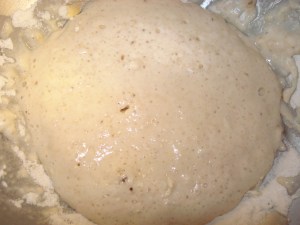
Dough will rise to double it’s original slice and be supple to the touch

provides extra levitation to the dough and gives a nice crunch to the crust.  Potato to be added in Part Two.

Part Two

  • Yeast Starter or 1 cube fresh beer yeast crumbled,
  • 2 ¼ cup flour (500 grams)
  • 1 Potato, peeled, boiled, mashed (optional)
  • 1 c warm milk (110 F or 43 C) (or may substitute with water)
  • 1/4 tsp salt

Combine all ingredients in large bowl: Yeast, Flour, Potato, Milk, Salt  May use dough hook, kneading for 5 minutes, or knead by hand. Knead dough until texture of dough is supple and elastic, not sticky, for about 5 minutes. With a small amount of oil on your hands gently spread the oil onto dough ball, place into a large bowl and loosely cover bowl with plastic wrap, setting aside in a warm area to rise for 1 hours. 

 Part Three  Pre-Heat oven to 425 F

Generously grease cookie sheet with 1 tsp of butter.

Place risen dough onto cookie sheet and extend dough into any round or square form.

TOPPINGS

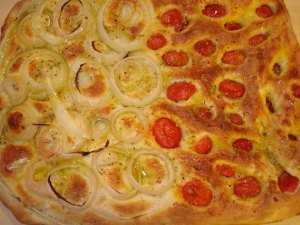
  1. Traditional Preparation: halved cherry tomatoes, inverted and gently pushed into extended dough.  Sprinkle on top of dough:   1/8 tsp oregano, 1 teaspoon Coarse Sea Salt, 1 Tbsp Parmesan Cheese, Drizzle ¼ cup Olive Oil.
  2. Try Focaccia with sliced onions spread over dough and gently pressed into dough with fingers. Add 1/8 tsp Oregano, 1/8 teaspoon Rosemary, 1 teaspoon Coarse Sea Salt, 1 Tablespoon Parmesan Cheese

Bake in preheated oven at 425 F  for 15 minutes. Before serving drizzle Extra Virgin Olive Oil over Focaccia for extra flavor.


By Kimberly Crocker

BUON APPETTITO!!!