“Traffic Light Diet” Easy to do. Adult & Kid Friendly

Adults and Kids are learning about how to make successful dietary lifestyle choices by classifying foods into three visual categories for a balanced diet.  Bariatrics Research studies on Judith Willis “Traffic Light Diet” have proven weightloss and a newly adapted eating philosophy that makes around the kitchen table sense.  It begins with the most common question asked throughout ones day is “What am I going to eat?” 

A better question is “Why do we eat?” Depending on your culture, family or personal health status the answers will vary.  Hunger, bored, energy, stressed or not stressed, pregnant, growth, sickness or disease, needing a sense of community around the table with others.  Equally important is the balance of food we consume in any given moment.  Energy from calories is what we end up acquiring at the end of each meal.   “Energy In” is taken in the form of:  carbohydrates, protein and fats.  While our “Energy Out” is spent on the development, production and maintenance of: blood vessels, bone muscle, spinal and cerebral fluid, movement, sleeping and studying.

When balancing food for fuel we can take time to understand what we are putting on our plate and how to proportionally meet daily intake.  Judith Willis author of the “Traffic Light” diet explains that we can quickly educate ourselves by following a Red, Yellow Green color coded approach to nutrition.  This diet is easily “digested” information and is great for both adults and children. 
Three Basic Catagories
Red food’s are: Oils, butter, condiments, foods high in sugar and salt, french fries, caffeinated and carbonated soda drinks, alcoholic beverages. 
While “All Foods Fit” in dietetics, those on this list should be consumed in small amounts.  For example, oils and butters are healthy for the body as they contribute to the lubrication of cells, organs, muscles, arteries and veins. They are also calorie dense so the saying “less is more” applies to ones dietary intake.  It should be noted that in large amounts butter can contribute to blockage of arteries and unnecessary weight-gain.
High intake of caffeine can stimulate or depress while too much alcohol interferes with liver or brain function.  Both Caffeine and Alcohol should be consumed in lesser amounts.
Whenever one has too much of a particular food and the calories are not consumed within 24 hours, the food will be converted to fat.  This philosophy is commonly noted with, but not limited to sugary drinks and snacks.
Yellow Food’s contribute to the development, rejuvenation and maintenance of all our cells, such as: hair, eyes, skin, hormones, bones, organs and muscles. They should be consumed in cautionary manner, paying attention to serving sizes.  Breads and pastas are said to be eaten in smaller amounts throughout the day.  Meat, pork chicken can be eaten twice a day in the amount of 3 ounces or 84 grams at each meal. One ounce or 28 grams of cheese is an appropriate amount for a daily meal. No more than a small cup of 100% juice (opt for fruit instead).  Nuts and legumes also need to be rationed into smaller quantities.  (Nuts 1 tablespoon, beans and potatoes a half of cup.) Eggs are an excellent source of protein and can be consumed 3-5 times a week.
Green foods can be devoured often, they are rich in fiber and therefore, provide 2-4 hours of satiety.  Some of these wonders include: 1/2 cup of fruit and vegetables (considered 1 serving each), low fat milk and yogurt three times a day. Cod or other varieties of white fish.  While breads would be limited it should be noted that whole grain cereals contribute a wide span of vitamin B’s which are critical to our daily diet and these include both whole grain pasta and breads. 
The Green Foods provide a slow and steady release of fructose and lactose into our bodies.  Providing the body with a feeling of satiety, appropriate glucose levels, energy and focus. By consuming more of these foods one will notice higher levels of energy and while their mind is more concentrated on the task at hand.  These foods include: Milk, fruits, vegetables, whole grains, seeds, nuts and fish.
A Word About Snacks. It is important to have healthy foods available for children and adults that are not always made up of empty calories. Teaching the benefits of making smart eating choices when they are young can lead to a lifetime of healthy eating habits. Snacks are an easy way to round off nutritional requirements for the day.Healthy appetizers should be kept in an area that is to reach, with unhealthy choices kept in less accessible areas. This will encourage one to reach for the healthy options first. By encouraging healthy snacking, both parents and their children will take in the nutrients and know-how needed for healthy living. These are Great tips and ideas for adults and kids alike, check out these 11easy to make Holiday Kid Friendly Appetizers
For more information and learning how to apply the diet go to http://www.trafficlightdiet.com/
Kim Crocker

Which Magic Mineral Helps to Heal your Body?

….. did you know that without certain minerals in your diet that you can gain weight, prematurely gray and produce wrinkles?

A word on the importance of MINERALS:  Vitamins cannot effectively work in our bodies without the correct balance of minerals. We grew up hearing that we must get our vitamins and to “eat our greens” But did you know without certain minerals consumed in our diet that blood production, bone growth, organ function, and vessel stability would be altered?  In other words a well balanced diet must be eaten.  For example; calcium is needed for vitamin “C” utilization, zinc for vitamin “A”, magnesium for “B” complex vitamins, selenium for vitamin “E” absorption, etc.

While only 5% of the human body is made up of mineral matter, they are critical to keeping the blood and tissue fluids from either becoming too acid or too alkaline.  By doing so, they allow other nutrients to pass into the bloodstream, aiding in transportation of nutrients to the cells and also drawing chemicals in & out of the cells.  It’s a big job for such a small object whose sole job is to make sure, that any slight change in the blood concentration of any mineral can quickly endanger life.

Please review the list below of vitamins and a short list on how they benefit of us. Additionally, various nutritional minerals are also listed with their functions and important roles in maintaining the human body’s homeostasis.

Vitamin K.  Promotes blood clotting, regulates blood levels, and activates 3 proteins for bone growth and health (gamma-carboxylase: BGP, MGP, Proteins S.

Vitamin A  helps vision and promotes bone growth, tooth development, and helps maintain healthy skin, hair, and mucous membranes.  Deficiencies:  Dry skin, blindness, poor bone growth, and weak tooth enamel. To heal

Acne, Healing Foods for nutritional therapy will benefit you.

Vitamins C and Vitamin E are antioxidants that effectively work against free radicals in order to protect the body’s cells.

Vitamin B’s releases energy from Carbs.

  • Vitamin B1 Thiamine:  ENERGY, controls fxn of heart, muscle, nervous system. 
  • Vitamin B2 Riboflavin: Growth, reproduction, produces RBC. 
  • Vitamin. B3 Niacin Digestive system, skin and nerves.
  • Vitamin. B5 pantothenic acid:  Metabolism Food, and formation of hormones.
  • Vitamin B6 Pryidoxine: Immune system, nerve fxn, RBC. Too little B6 in the diet can cause dizziness, nausea, confusion, irritability and convulsions. Critical for protein rxn’s. 
  • Vitamin B9 folate/folic acid:  RBC, nervous system, creates and forms DNA, brain fxn, spinal fluid. cell growth, developing baby growth in utero. 
  • Vitamin  B12:  RBC, maintains central nervous system.

 LIST OF MINERAL FUNCTIONS AND DEFICIENCY SYMPTOMS

As outlined by Dr. Joel Wallach in his booklet “A DIRE WARNING”

Bismuth   Ulcers result from lack of bismuth & a bacteria Heliobacter pylori

Boron    Aids efficient calcium and magnesium use, Essential for bone metabolism, Proper endocrine function, Reduces calcium loss from bones (Osteoporosis)

Calcium Is a Magic Mineral High protein diets increases demands for calcium, Deficiency Produces: Arthritis, Back pains (sciatica, disc problems), Bell’s Palsy, Bone spurs, Brittle fingernails, Calcium deposits, Cognitive impairment, Delusions, Depression, Eczema, High Blood Pressure, Hyperactivity, Hypertension, Insomnia, Irritability, Kidney stones, Limb numbness, Muscle cramps/spasms/twitches, Nervousness, Neuromuscular excitability, Osteomalacia (failure to mineralize the protein bone matrix), Osteoporosis (& Dowagers Hump, spontaneous fractures, kyphosis), Panic attacks,  Periodontal disease – receding gums (osteoporosis of facial bones & jaw bones),  PMS, Pica (eating lead paint),  Rickets, Retarded growth,  Tetany,  Tooth decay

 Cesium is a Cancer Aid; Cesium enters cancer cell and produces alkaline condition

Chromium

Deficiency Produces:  ADD/ADHD, Anxiety, Anortic cholesterol plaque, Coronary blood vessel disease, Depression/Manic depression, Diabetes (Vanadium also), Dr. Jeckyll/Mr. Hyde rages, Elevated blood cholesterol, Elevated blood triglycerides, Fatigue, Hyperactivity, Hypercholesterolemia, Hypoglycemia – low blood sugar (vanadium & copper also), Infertility and decreased sperm count, Learning disabilities, Negative nitrogen balance (body lean mass/protein loss), Prediabetes (vanadium also), Peripheral neuropathy,  Retarded growth, Shortened life span

Cobalt   Deficiency Produces: Anemia, Anorexia, Emaciation, listless, starved look, pale mucus membranes, Essential part of Vitamin B 12 (Growth and nerve system function)

Copper is critical part of your diet to avoid deficienies produce:  Alopecia (hair loss) and premature graying, Anemia (common in vegans & high milk users), Aneurysms (on wall bulges), Aneurysm / cerebral hemorrhage, Arthritis (especially where growth plates are involved), Cerebral palsy & hypoplasia (failure to form) of the cerebellum, Criminal or violent behavior, blind rage, explosive outbursts, Depression, Dermatitis, Diarrhea, Dry brittle hair, Fatigue, Fragile bones, Hernias, High blood cholesterol, Hypercholesterolemia, Hypo or Hyper thyroid, Ptosis (sagging tissue – eye lids, skin, breasts, stomach, etc.), Kawasaki Disease, Learning disabilities, Liver cirrhosis (number 9 killer in the U.S., Ruptured vertebral discs problems,  Reduced glucose tolerance (low blood sugar), Respiratory disease, Swachman’s Syndrome, Varicose veins, Weak and fatigue, Memory loss, sore tongue. Hemoglobin (carries oxygen in red blood cells)

Europium Doubles the life span of laboratory animals

Fluoride In plant based colloidal form will aid bone strength & no toxicity

Germanium is a must and will Enhances Immune System Function (killer cells, interferon, macro phages and T-suppressor cells), Highly efficient electrical impulse initiator, Aids in oxygen utilization. Deficiency: Arthritis, Cancer, Low energy, Osteoporosis

 Gold Reduces active joint inflammation

 Iodine works with Copper in order to properly utilize Iodine, Needed by body for thyroid function (Thyroxin is thyroid hormone), Deficiency Produces: Hypothyroidism, increased appetite, Weight gains Weight loss, Cold intolerance, Brittle nails, Bulging eyes, Constipation, Depression, Dry skin & hair, Elevated blood cholesterol, Excessive sweating, Fatigue, Frequent bowel movements, Goiter (throat swelling), Hair loss, Hand tremors, Heat intolerance, Heavy periods or less than 28 day cycles,  Irritability, Inability to concentrate, Insomnia, Light periods or longer than 28 day cycles, Low basal body temperature, Low sex drive, Muscle aches and pains, Muscle cramps, Muscle weakness, Nervousness, Over-active Thyroid, Poor memory Puffy face, Rapid pulse, Under-active Thyroid,

Lanthanum   Deficiency may be involved in chronic fatigue diseases

Lithium to overcome Depression and Infertility Deficiency: ADD, Depression, Infertility, Lithium deficiency aggravated by high sugar consumption, Manic depression, Rages & fits, Reduced growth rate, Reproductive failure, Shortened life span

 Magnesiummagnificently combats and helps maintain homeostasis.  However a Deficiency Produces:, Anxiety, Asthma, Anorexia, Birth Defects, Calcification of small arteries, Confusion, Depression, Growth failures, Hyperactivity/synophobia, Hypotension, Hypothermia, Insomnia, Irritability, Malignant calcification of soft tissue, Menstrual, Migraines, Muscle pains/tremors/ weakness, Nervousness/Neuromuscular irritability, Neuromuscular problems, Restlessness, Seizures, SIDS, Tachycardia/palpitations, Tetany – Convulsions, Tremors, Vertigo

Manganese

  Deficiency:, Asthma, Ataxia, Atherosclerosis, Chondrornalacia, Chondrodystrophy, Convulsions, Dizziness, Hearing Loss, Hypercholesterolemia, Hypoglycemia, Infertility (failure to ovulate or testicle atrophy), Loss of sex drive, Pancreatic atrophy, Poor cartilage formation problems, Repetitive Motion Syndromes (like TMJ, Carpal Tunnel Syndrome), Retarded growth rates, Shortened long bone, Still births or spontaneous miscarriages, Tinnitus

Molybdenum

Essential as a metalloenzyme of several enzyme systems

Nickel

  Deficiency: Anemia (low hematocrit), Delayed puberty, Depressed oxidative ability of the liver, Dermatitis, High newborn mortality, Poor growth, Poor zinc absorption, Rough/dry hair coat in animals

Phosphorus

Deficiency:  Anorexia, Anxiety, Apprehension, Bone pain, Dyspnea, Fatigue, Irritability, Numbness, Paresthesias, Pica, Tremulousness, Weakness, Weight loss

Potassium

   Deficiency:  Acne, Arrhythmia, Cognitive impairment, Constipation, Depression, ECG changes, Edema, Fatigue, Glucose intolerance, Growth retardation, Hypercholesterolemia, Hyperretlexia, Hypotension, Insomnia, Mental apathy, Muscular weakness, Nervousness, Palpitations, Plydipsia, Proteinuria, Respiratory distress, “Salt” retention, Tachycardia (rapid heart rate), XerosisPraseodymium Doubles life span in laboratory animals, Enhances normal cell growth

Samarium

Doubles life span in laboratory animals, Enhances normal cell growth, Animal studies show deficiencies cause:  Cancer prevention properties, Hearing loss, Male pattern baldness, Poor growth & Poor feeding

Selenium

Effective anti-oxidant Deficiency:  Age spots or liver spots, ALS (Lou Gehrig’s disease), Alzheimer’s Disease (associated high vegetable oil consumption), Anemia (red blood cell fragility), Cardiomyopathy, Cataracts, Cancer Risk, Cystic fibrosis, Cancer (associated with high vegetable oil intake) (Number 2 killer), Fatigue, Growth Retardation, Heart palpitations (irregular heart beat), High infant mortality, HIV (AIDS), Impaired immunity, Infertility, Keshena Disease (myocardial fibrosis), Liver cirrhosis, Low birth weight, Multiple Sclerosis, Muscular dystrophy, Myalgia, Pancreatitis, Pancreatic atrophy & fibrosis, Parkinson’s Disease (associated lead poisoning), Scoliosis, Sterility in males, Sudden Infant Death Syndrome (SIDS), Sickle cell anemia

Silica Increases collagen in growing bone by 100% Deficiency:  Brittle fingernails, Dry brittle hair, Poor calcium utilization arterial wall strength problems, Poor skin quality,


Silica Benefits:  Anti-bacterial, Anti-fungal, Anti-viral, Kills over 650 diseases causing organisms, Systemic disinfectant & immune support, Subdues inflammation & promotes healing

Strontium Essential trace element, Strontium can replace calcium in many organisms including man

Sulfur   Important mineral used in several amino acids within the body, Involved in functions of hemoglobin, insulin hormone, adrenal hormones, enzymes, and antibodies Deficiency:  Degeneration of cartilage, ligaments and tendons, Lupus, Several collagen diseases, Sickle cell anemia

Thulium Doubles the life span of laboratory animals, Enhances growth of normal cells

Vanadium Aids in glucose (blood sugar) oxidation and transport, Anti-Cancer properties, Decreases cholesterol production, Enhances insulin effectiveness (aids with blood sugar problems), Increases effectiveness of heart muscle contraction Deficiency:  Cardiovascular disease, Diabetes, Elevated cholesterol & triglycerides, Hypoglycemia, Increased infant mortality, Infertility, Obesity, Slow growth

Ytrium Doubles life span of laboratory animals, Enhances nominal cell growth

Zinc  Deficiency associated congenital birth defects:  Cleft lip & Cleft palate, Clubbed limbs, Down’s syndrome, Heart & lung defects, Hiatus hernia& umbilical hernia, Small or absent eyes, Spinal bifida, Webbed toes or fingers, Urogenitat defects Deficiency:  Acne, Acrodermatitis enteropathica, Alopecia (hair loss), Anemia, Anorexia and/or Bulimia, Apathy, Birth defects (see above), Bad body odors (“smelly tennis shoe” syndrome), Brittle nails, Depression, Diarrhea Enlarged prostate, Eczema, Fatigue, “Frizzy” hair, High infant mortality, Hypercholesterolemia, loss of sense of taste, Infertility, Impaired wound healing, Impotence, Irritability, Lethargy, Loss of sense of smell, Malabsorption, Memory loss, Paranoia, Pica (eating hair, wool, etc.), Poor growth (short stature), Sexual immaturity (remain in pre- puberty state), Small and/or poor ovary and testes function, Sterility, Weaken immune function, White spots on nails


Burning Calories and Eating Healthy, Lifestyle Change!

The following MEAL PLAN is recommended for anyone and provides the daily intake of minerals and nutrients that your body needs to stay strong and healthy.  You can absolutely lose weight on this diet!  It’s loaded with fruits, vegetables, grains, protein and fat.  Most do not realize that eating vegetables is a trick to weight-loss, due to the amount of energy your body utilizes to metabolically break them down. 

As with any food that one consumes, read the food label to understand what a serving size is before over loading your plate and understand your meal plan when planning your grocery shopping list. 

Follow the suggested catagory on the left column for fruit, vegetable, meat, or bread.  The right side of the column provides just a few suggested food items.  (LS or Low Sodium is heighly recommended for weightloss.)  Vegetarians may choose meat substitutes, Tofu, beans, nuts or eggs.

Breakfast
Bread or Cereal…. Oatmeal LS, Total Cereal, Cheerios
Fruit…………………..Apple, Orange, Pear, Apricot, Banana, Cherries, Berries
Milk……………………Skim or 1% (8 oz), Low or nonfat Yogurt

Snack am
fruit (1-2 of choice.  1 fruit is 1 serving size), or Blend 2-3 Fruits with 4 oz OJ 

Lunch
Vegetable……………Cole Slaw, Green Salad, Veggie Salad, Pepper sticks, Broccoli
Vegetable……………LS Cream of Potato Soup  (Choice of Soup, Salad, Vegetable)
Meat (3 ounces)………Tuna, Turkey, Herring, Salmon, Beef, Chicken
Vegetable…………..(Any) Twice baked sweet potato, Aparagus saute’ EVOO & Garlic

Fruit……………… …Fruit Salad or Fruit of Choice, (Avocado & Tomato seasoned, EVOO)

Snack pm
1 0z …………………..nuts or seeds (unsalted)
Milk…………………. 1% Skim or 4-6 oz low or nonfat yogurt

Dinner
Meat (3 Ounces)………………. Chicken Patty, Pork, Beef, Fish, Turkey,
Bread……………… (Bread is optional.  Choose whole grain or wheat bread.)
Vegetable………..Lettuce, tomato and onion (cooked or raw)
Vegetable……….. Baked beans
Fruit………………. Kiwi-Strawberry or a 
 LS, Reduced sugar content Dessert acceptable i.e. Sherbert

Do your research before starting on a Meal Plan and altering your dietary intake.  Remember to consult with your Doctor or Dietitian so that you can make the necessary changes to a healthier lifestyle. Include various types of exercise (walk, bike swim, roller blade, team sports) to promote bone, muscle and metal health. 

For more information on how to enhance Lifestyle Change read: “How to nutritionally and effectively Down Shift to 1350 Calories per day”; “How Tea’s effect weightloss” and Flatten your Tummy for a Poolside Silohouette“.  There are a few respectable weightloss programs such as USANA’s Macro Optimizer, Reset,  which provides nutritional supplements, so that you can achieve your goal weight effectively.  Check out the various types of Meal Plans and if you should (Avoid Sports Drinks?)  It’s a 310 calorie article you don’t want to miss!

By: Kimberly Crocker-Scardicchio

Literature Research

http://www.healthalternatives2000.com/fruit-nutrition-chart.htmlhttp://www.cancerhelp.org.uk/help/default.asp?page=116#stemhttp://www.ifanca.org/newsletter/2002_07.htmhttp://ezinearticles.com/?Calorie-Shifting-Meal-Plan&id=870062http://www.ncbi.nlm.nih.gov/pubmed/15930970?ordinalpos=4&itool=EntrezSystem2.PEntrez.Pubmed.Pubmed_ResultsPanel.Pubmed_RVDocSumhttp://www.ncbi.nlm.nih.gov/pubmed/17412526? ordinalpos=3&itool=EntrezSystem2.PEntrez.Pubmed.Pubmed_ResultsPanel.Pubmed

Win $25,000! Lipton Tea Video Contest

Healthy, Nutritional.  A Smart Tea that contributes to your longevity!

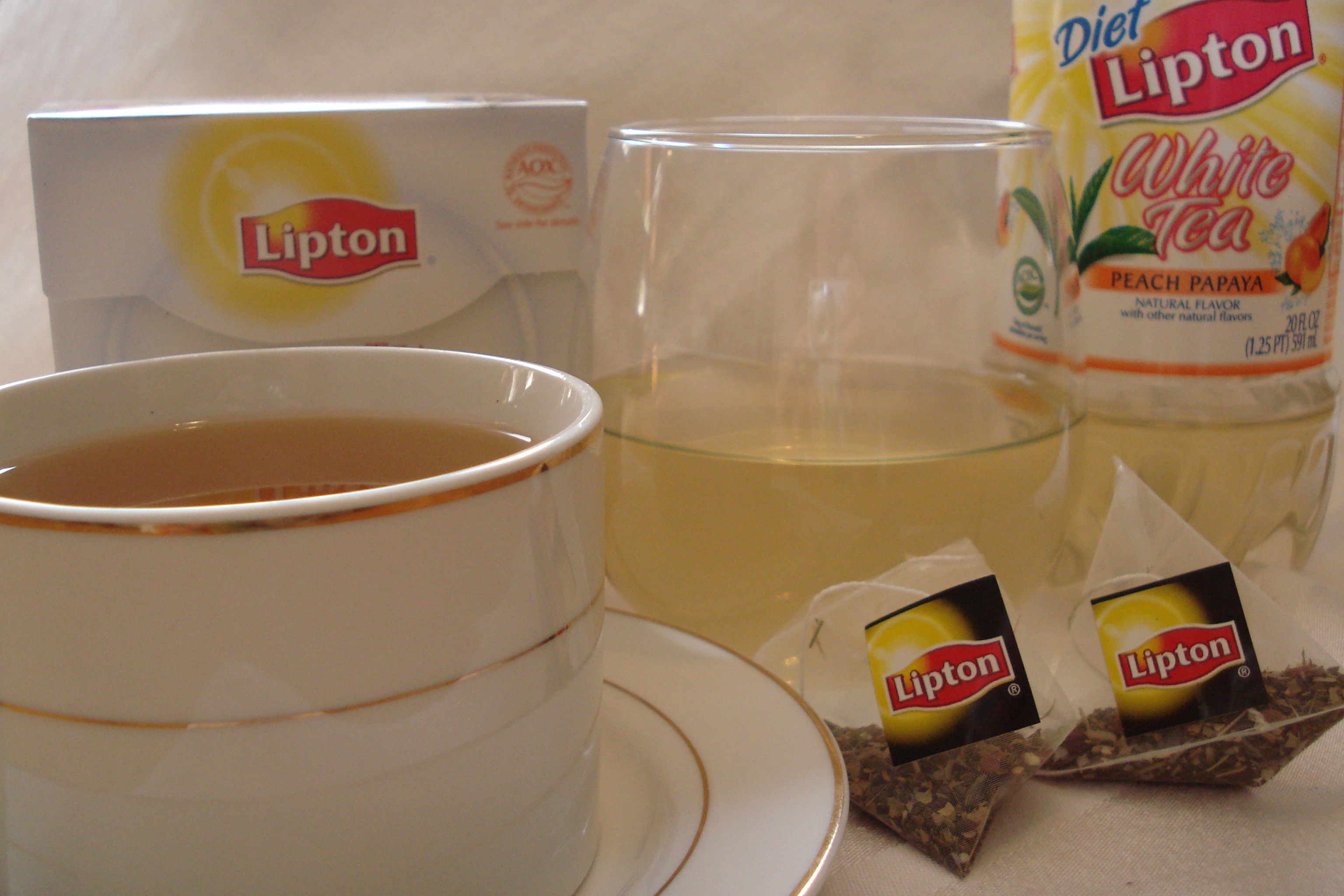
Lipton is promoting their new White Tea in ready-to-drink bottles and “To Go” packs.  To launch the new line of tea products and highlight that Lipton White Tea is made from young White Tea buds, they have launched the “Free Your Y” (your youth) campaign, and giving away $25,000 through the “Free Your Y” video contest, which will be active through May 17th.  The “Free Your Y” concept is aimed at encouraging people to tap into and express their inner youth, and the contest will ask people to share – via video – what they do to feel young and active.

Relax and Heighten Your Senses

The Kitchen smells of a bouquet of Papaya, Raspberries, Mango and Peaches.  Spring is in the air and the flavorful fruit smells that embrace me, don’t place me in an exotic country, but in my mid western home.  I have three different tea’s in front of me, which have tantalized my tongue and whose perfume has awakened my senses.  Lipton’s white tea has a taste that is light and mild. It is a refreshing way to enjoy a drink made from a combination of natural flavors, orange leaves, lemon grass, rose hips and licorice root.  They are packed with antioxidants to combat free radicals brought on by stress and a fiber reduced diet.  Dentist’s will make this their recommended tea of choice, as white tea’s staining properties are not as intense as other tea’s.

White Tea Facts

“White tea comes from is chiefly produced in Fujian Province in China with only limited or negligible production outside and more commonly just known as Yinzhen. Amongst white teas this is the most expensive variety and the most prized as only top buds are used to produce the tea. Most Yinzhen is made from the Da Bai or Large White tea tree race, however there are exceptions such as the big bud teas from Yunnan. Yinzhen tea is considered to be good for health. According to the researchers at the Linus Pauling Institute at Oregon State University, white tea may be used to fight cancer as well as acting as a deterrent.  The tea is nowadays mostly grown in the Fujian Province and there are generally two major producing counties, Zheng He and Fuding.”

  1. Lipton Tea Contest http://www.areyouyoungenough.com/

  2. http://youtube.com/results?search_query=lipton+tea&search_type=

  3. http://en.wikipedia.org/wiki/Bai_Hao_Yinzhen_tea

By:  Kim Crocker


Down Shift to 1350 Calories

Many people are interested in Calorie Shifting.  Not knowing how to properly reduce certain nutrients makes it a dangerous diet.   A 2000 calorie diet is what the average person is recommended to eat on a daily basis.  This provides an individual with an optimal diet, in which the body receives an adaquate amount of nutrition to keep going throughout the day. 
However, 2000 calories can also seem like alot to a smaller frame individual, or someone who is not active, both which would require less caloric intake. There is a healthy way to determine your caloric intake by removing certain foods without bringing on long term detrimental results to your organs, muscles and bones.              Design your 1300-2000 Calorie Meal Plan…Cut calories and stay healthy!  Eat 5 meals a day and have something to drink with and between meals.  Fluids are equally important to a successful diet.

Add 1-2 glasses of water with 1/2 to 1 whole lemon each day.  One may also drink 1-2 cups of tea each day. (Oolong tea burns over 157% more fat than Green Tea and has become the most popular tea designed to accelerate weigh loss). Also read about if you should Avoid Sports Drinks?.

Typical 2000 Calorie Recommended Meal Plan

  • 4 Fruits- 240 calories,  (approx. 60 calories each)
  • 6 Vegetables- 290 Calories, (approx. 48 calories each)
  • 5 servings Bread -200 calories, (Aunt Milles bread has 80 calories per serving)
  • 3 Milk/Dairy -300 Calories, (Approx. 100 calories per serving)
  • 2 Meats or Fish -600 Calories, (Approx 300 calories per 3 ounces)
  • 3 Fats -360 calories.   (Approx. 120 calories per tablespoon)

  • Breakfast
  • Aunt Millies Bread** (whole/multi-grain) or Oatmeal,
  • fruit,
  • 1% or skim milk, 1 tsp healthy fat (Olio butter)
  • Snack
  • fruit,
  • 1 bread (2 graham crackers)
  • Lunch
  • 3 ounce fish or lean meat, 
  • 2 slices of (bread whole or multi-grain), 
  •  salad with 1-2 vegetables Salt/Fat free dressing,
  •  bread, 
  • fruit
  • Snack
  • Vegetable, 
  • Nuts 1 oz (optional protein)
  • Dinner
  • 3 ounce fish or lean meat,
  • 2 vegetables,
  • fruit, pasta/rice (bread), 
  • skim milk, 1 oz no fat cheese (milk), 
  • low fat dessert,
  • Healthy Fat used for cooking i.e. Extra Virgin Olive Oil

**Bread: Recommend Aunt Millies Bread 2  slices is only 1 serving and 80 Calories and will save 200 calories on this Meal Plan!

 Meal Plan with reduced caloric intake

NEW Total: 1350 Nutritional Calories, may Reduce Calories by Removing:  

Any 3 Bread servings 160 calories,

1 Meat serving 300 calories,

1 Fat Serving 120 calories,

1 Milk/Dairy 100 calories.

Total removed Calories  -640. 

For more great articles on Nutrition Facts, Health Hints, Dietary Intake and Recipes Eat Know How.

Great Link to Check out for additional help. http://www.montana.edu/health/nutrition/healthyway.html