Sodium Benefit’s & Limit’s

Do you crave salt or sugar?

Have you noticed that your tastes may vary, craving salty or sweet foods in different moments of the day? Years of gathered research from studies done on infant’s to adult’s show that salt  is both a preference and a requirement.  The same research proved that we have a craving for sweet tasting food’s driven by a gene which promotes the need for fruit and vegetables.

“It is worth one’s salt” to understand sodium’s importance in maintaining the health of  the body and the difference between:

  • Salt and sodium
  • Salts benefit’s and limit’s
  • How to interpret our blood pressure numbers
  • Foods reducing Sodium level’s

Difference between Salt and Sodium

While sodium and salt are words that are  often interchangeable the difference is determined between the name of the mineral and the function of one of its element’s.   Salt, also known as sodium chloride  (NaCl) is made up of  two elements: 40% sodium (Na) and 60% chloride (Cl).  1/4 teaspoon of salt contains 600 milligrams of sodium (Na).  The body requires no more that 2300 milligrams of sodium per day, or 1 teaspoon of salt a day.

Sea Salt and Table Salt have the same amount of sodium. Sea salt is produced from the evaporation of sea water, while table salt is: mined, ground and has iodide added to the grains. (which lacks in sea salt).

Salt’s Benefit’s and Limit’s

Briefly stated, the benefits of sodium are found in: sweating, transporting nutrient’s from head to foot, transmitting nerve impulses (250-500 mg sodium just for neurological & psychological function’s) and contracting muscles such as your heart.

Equally important are the limit’s that sodium imposes; when the kidney has an excess of sodium it releases water which then  increases the blood volume.  As the blood level increases, it’s flow within the body also increases the blood pressure.  The heart will in turn work harder to pump blood which in creates instability within the blood vessel’s and creates a risk for heart problems, or a stroke. A great argument for limiting daily salt intake. Limit sodium intake to 1500 mg Na per day (1/2 tsp salt) For those: over age 51, have diabetes, high blood pressure or chronic kidney disease.

Interpreting Blood Pressure Number’s

A Doctor’s appointment will prove valuable  in evaluating an individual’s blood pressure.  As adult’s age systolic blood pressure  increases by four points per decade. The systolic number is the first number documented in a blood pressure reading 120/80. 120 mm Hg (millimeters of mercury) indicates  the maximum arterial pressure  during a contraction of the left ventricle of the heart contracts. It is advised to not exceed the maximum pressure of 120 so as to not force the heart to work harder in pumping the necessary blood that the body requires. While the diastolic, second number “80”mm Hg, represents the pressure when the heart is resting between beats.

  • Rating                                         Systolic                Diastolic
  • Optimal                                      <100                     <80
  • Normal                                      < 130                     <85
  • High Normal                                 135-139                  85-89
  • Hypertension Stage 1                   140-159                  90-99
  • Hypertension Stage 2                  160-179                 100-109
  • Hypertension Stage 3                  >179+                  >109

Symbols:
Less than <
Greater than >

Eat Food High in Potassium to Reduce Sodium Levels 

If no other health problem’s are present, keeping blood pressure within normal level’s can be achieved through simple changes at mealtime. Daily drink 6-8 glasses of water and chew on food with higher amounts of Potassium  (K)  which will push unnecessary amounts of Na from the body. An individual needs to consume only 4700 mg K per day to keep the mechanic’s of the body in optimal condition. While all fruits and vegetables will have Potassium the following have higher amounts, choose any 2-3 per meal:

  • 1 Sweet Potato or  1 Baked Potato
  • 8 oz Yogurt
  • 4 Prunes 0r 1 Banana
  • 1/2 c diced Tomato or 1/2 c. chopped Spinach
  • 1/2 c. White or  Lima or 1 Tbsp Soy bean’s
  • 3 ounces Clams, Halibut, Cod or Tuna Fish
If  blood pressure falls into the hypertension category foods to immediately avoid: Carrots, Celery, Spinach, Beets and remove the Water Softner.

 4  Effective Changes to Reduce Sodium when Preparing, or Seasoning Meals:

  •  When purchasing prepackaged foods READ the FOOD LABEL make sure that the Potassium values are higher than the sodium values.
  • Throw out bottled: seasoning’s, garlic and onion powder’s
  • Reduce salt by 1/2 of normal use
  • Incorporate 1 Tablespoon freshly chopped herbs, 1/2 tsp lemon zest, 1/4 tsp cracked black pepper, a minced garlic clove and/2  onion for flavoring foods.   Herbs and Spices to Replace the Salt Shaker

By: Kimberly Crocker

References

Calorie Shifting Fad and Facts

Foods to Reduce Bloating & Promote Diet   

 Tea’s Body Healing and Weight Loss

 Benefits of Lemon Water 

Consider this question, “Who invented the word DIET?” Its origin has evolved over time and spelling varies with language, Old French diete taken from Latin diaeta: “A day’s journey, or a day’s meeting / assembly”;  from Greek diaita derived from diaitan: “Mode of living” or to direct one’s own life“.  The word “diet” was intended to describe a day’s journey or meeting, or ability to take control of one’s own life. Within the origin of the word rests an implication of our own individual daily needs and how we utilize that to effectively and efficiently run our lives and hopefully enjoying that moment at a table with others!

Today Diet’s are promoted by healthcare provider’s, encouraging quick weight loss, in order to ensure an individual of surgery with reduced amount of risk to them while undergoing the “knife”.  Sometimes the “diet’s” are given and the measures of weight loss are drastic! The individual is carefully monitored on a weekly basis with bio-markers constantly reviewed. Bio-markers that are watched with greatest of attention are: Liver enzymes, muscle loss, bone loss, various hormones, lungs, heart, urine. All which are critical to understanding the health of the body as it endures change.

Should we be calling it “Lifestyle” instead of “Diet”? A concept that needs to be enforced in the American Society on a regular basis. What are we eating and why are we eating it? These two questions should be foremost thoughts before picking up the food with the idea of consumption.  Different foods provide a purpose each and every day. There are foods with a higher level of potassium which certain athletes consume on a regular basis, i.e. banana’s, orange’s and peanuts. While other athlete’s in field sports may consume higher level of protein. If an individual is sick, larger amounts of chicken soup, onion and garlic may be necessary. While the sleep deprived may want to consider; warm milk, turkey, chicken and a handful of nuts, all containing tryptophan (amino acid), that converts to serotonin (hormone), providing a more restful sleep. Infections (yeast) can be curved with a 3 glasses of green tea doctored up with honey and cinnamon. 

The idea of having a perfect silhouette is attractive by magazine standards. How one gets there should be done with caution, listening to ones own personal needs and under the careful eye of a Doctor, or Dietitian.  More importantly, make sure that other’s know that you are making a LIFESTYLE CHANGE so they can root you on and also make sure that you do not go to extremes. Most will confirm that it is more challenging to re-start the eating process for maintenance than losing the weight.

A Lifestyle (diet) of Fish, Vegetables, Multi-Grains contributes to heath & longevity

What should be included in a “Lifestyle Change” is a healthy fat; a daily dose of minerals and vitamins (2-3 tablespoon’s) will contribute to the elasticity of veins, muscles (all organs) and ligament’s. Consider exchanging the bottled salad dressing for extra virgin olive oil when enhancing a plate of mixed greens and tomato’s (Sunflower, Peanut and Coconut are also good fat’s). A high quality fish fat should be included in a meal 3-4 times a week and comes from: salmon, tuna, anchovies, sardines, mackerel all have both omega 3 and omega 6. Animal fat should be kept at a minimal of 2-3 times a week (aiming for a 7% animal fat) including: poultry, red meats, pork. Dairy fat’s are solid at room temperature, therefore must be consumed in smaller amounts daily: Butter (1 teaspoon), Cheese (1 ounce daily), Milk (skim or 1% 2-3 cups a day), Ice Cream (low fat 1/2 cup sparingly).

Below is listed a three day Calorie Shifting meal plan. Please note that the CS diet is NOT recommended or promoted.   This is all you would eat in three days!!! It lacks daily serving requirement’s of: fruit, 5 vegetables, a healthy fat, multi-grains (B vitamins i.e. folic acid for the brain & central nervous system) all critical to maintaining a healthy body.

Day 1

Meal #1: Scrambled Eggs Meal

Meal #2: Sandwich (any type)

Meal #3: Flavored Oatmeal

Meal #4: Tuna Salad

Day 2:

Meal #1: Cottage Cheese

Meal #2: Scrambled Eggs [and] Mixed Vegetables

Meal #3: Chicken

Meal #4: Banana Milk Shake

Day 3:

Meal #1: Chicken

Meal #2: Fish Fillet

Meal #3: Cottage Cheese

Meal #4: Fruit Salad

HOLD ON!  Not all is doom and gloom….

The following MEAL PLAN is recommended for anyone and provides the daily intake of minerals and nutrients that your body needs to stay strong and healthy.  You can absolutely lose weight on this diet!  It’s loaded with fruits, vegetables (which burn the most calories when metabolically broke down), grains, protein and fat.  Most do not realize that eating vegetables is a trick to weight loss, due to the amount of energy your body utilizes to them breakdown.  As with any food that one consumes, read the food label to understand what a serving size is before over loading your plate and understand your meal plan when preparing your grocery list.

Follow the catagory on the left column for fruit, vegetable, meat, or bread.  The right side of the column provide just a few suggested food items.  (LS or Low Sodium is heighly recommended for weightloss.)  Vegetarians may choose meat substitutes, Tofu, beans, nuts or eggs.

Breakfast
Bread or Cereal…. Oatmeal LS, Total Cereal, Cheerios
Fruit…………………..Apple, Orange, Pear, Apricot, Banana, Cherries, Berries
Milk……………………Skim or 1% (8 oz), Low or nonfat Yogurt

Snack am
fruit (1-2 of choice.  1 fruit is 1 serving size), or Blend 2-3 Fruits with 4 oz OJ 

Lunch
Vegetable……………Cole Slaw, Green Salad, Veggie Salad, Pepper sticks, Broccoli, Cucumber
Vegetable……………LS Cream of Potato Soup  (Choice of Soup, Salad, Vegetable)
Meat (3 ounces)………Tuna, Turkey, Herring, Salmon, Beef, Chicken
Vegetable…………..(Any) Twice baked sweet potato, Aparagus saute’ EVOO and Garlic

Fruit……………… …Fruit Salad or Fruit of Choice, (Avocado and Tomato seasoned, EVOO)

Snack pm
1 0z …………………..nuts or seeds (unsalted)
Milk…………………. 1% Skim or 4-6 oz low or nonfat yogurt

Dinner
Meat (3 Ounces)………………. Chicken Patty, Pork, Beef, Fish, Turkey,
Bread……………… (Bread is optional.  Choose whole grain or wheat bread.)
Vegetable………..Lettuce, tomato and onion (cooked or raw)
Vegetable……….. Baked beans
Fruit………………. Kiwi-Strawberry or a 
 LS, Reduced sugar content Dessert acceptable i.e. Sherbert

Do your research before starting on a Meal Plan and altering your dietary intake.  Remember to consult with your Doctor or Dietitian so that you can make the necessary changes to a healthier lifestyle.  For more info on how to enhance Lifestyle Change read: “How to nutritionally and effectively Down Shift to 1350 Calories per day”; “How Tea’s effect weightloss” and Flatten your Tummy for a Poolside Silohouette“.   

By: Kimberly Crocker-Scardicchio

Literature Research

http://www.healthalternatives2000.com/fruit-nutrition-chart.htmlhttp://www.cancerhelp.org.uk/help/default.asp?page=116#stemhttp://www.ifanca.org/newsletter/2002_07.htmhttp://ezinearticles.com/?Calorie-Shifting-Meal-Plan&id=870062http://www.ncbi.nlm.nih.gov/pubmed/15930970?ordinalpos=4&itool=EntrezSystem2.PEntrez.Pubmed.Pubmed_ResultsPanel.Pubmed_RVDocSumhttp://www.ncbi.nlm.nih.gov/pubmed/17412526?ordinalpos=3&itool=EntrezSystem2.PEntrez.Pubmed.Pubmed_ResultsPanel.Pubmed_RVDocSum

Reducing Triglycerides and Cholesterol

FOLLOW UP WITH: Cholesterol and Triglyceride Reducing Foods

Understanding Triglycerides in the correct amount   The body needs a supply of two types of  lipids/fats that circulate in our blood stream: triglycerides and cholesterol. Triglycerides are made in the liver and stored in fat cells, playing a key role in energy for muscle function. While this article in brief, takes a closer look at triglycerides it is equally important to keep its partner in mind, cholesterol, which is key for muscle cell membrane and making of hormone’s.  The liver builds triglycerides by using a glucose (sugar) with three fatty acids attached to it, however they can be made without food consumption as well.  After triglycerides are built, they can be stored in the liver, or sent to and stored within muscles.

     Three functions, of triglycerides are:
  1. Energy for all parts of the body.
  2. Insulation to help keep the body in homeostasis (balance of temperature).
  3. Provide adequate nutrition when we are sick, delivering fat vitamins (K, A, D, E).

How it works:  The liver creates triglycerides as stored energy. When energy levels become low, the hormone glucagon orders the fatty acids to be broken off of the sugar base. The sugar and fatty acids can both then enter energy production cycles

Cause and Effect:  The calorie is a measurement of heat energy. Carbohydrates and proteins contain only 4 calories per gram. Fats contain 9 calories per gram, thus providing the body with more than twice the amount of energy as sugars and proteins.  Triglycerides are the most concentrated form of energy found within the body, producing more than twice the amount of energy per gram than other forms of energy (protein and carbohydrates), which is why the body can store large amounts of triglycerides.

Clearing up the confusion:  Keep in mind that triglycerides are stored in fat cells and some muscle cells. While your body prefers to use fat as the main energy source, it should represent less than 30 percent of your diet. High-fat diets leave you at risk of obesity.  Your blood value must be <150 (less than 150).  More than 150 puts an individual at risk.

Fish, fruits, vegetables promote HDL Cholesterol to reduce LDL Cholesterol

An excess of triglycerides causes fat buildup in the liver and around the muscles, causing an increase in body fat percentage. Triglycerides are the most common type of fat found in your body and blood plasma. The body absorbs and uses all the energy consumed from food eaten throughout the day, getting rid of anything it cannot use turning it into triglycerides, storing them in your fat deposits.  As a body takes in more food than it can store, the unused food is stored as triglycerides in lipid cells, the more that this happens, the bigger the risk for the build up in the system, placing the individual at risk for diabetes, strokes and heat attacks.

Foods to eliminate in dietary intake in order to reduce triglyceride levels are:  Alcohol, Dairy, Pork, White Breads, Reduce Red Meat to 3 ounces twice a week.  

Read More: Remove Alcohol For Quick Weight Loss 

Food Pyramid for improved Health

Include these foods for improved Triglycerides Cholesterol and Triglyceride Reducing Foods and learn more about how to balance your meals by following Dietary Serving Guidelines . Increase Fish: Salmon, Anchovies, Sardines, Herring, Mackerel intake 4 times a week to improve quality of Omega 3 (healthy fat) and protein. By introducing fish into your lifestyle, the body responds to a fat that is easier to break down with protein that the organs need in order to have improved function. For fiber include 4 servings of Fruit and 5-7 servings of vegetables a day. Quality of vitamins and minerals is critical to a reduction of unwanted food that would otherwise by stored as triglycerides in fat (lipid) cells.  By doing so you can keep your HDL Cholesterol >70, the LDL Cholesterol <120 and Triglycerides <150.

Recipes to include in your diet

Tuna Steak

Roasted Pepper and Carrot Soup

Lemon Infused Chicken or Fish

Written by:  Kim Crocker Scardicchio

Berry Fresh & Pina Colada Frappe`s

Fresh fruit drink.

3 Fruit servings in 1 drink!

1/2 c Strawberries’ (hulled) or Blueberrie’s washed

1 Banana peeled and quartered

4 ounce Vanilla Yogurt or Ice Cream

3 ounces  Orange Juice.

1/4 cup Crused Ice

Place all in a mixer and blend for 30 seconds.

May drink immediately, served chilled or frozen.

Pina Colada 2 servings Fruit

Pina Colada Frappe`

1 Banana peeled and quartered

1/2 cup Pineapple

3 ounce Pineapple Juice

4 ounce Coconut Cream (yogurt).  For nut allergies use Vanilla Yogurt

1/4 cup Crushed Ice (optional)

Place all ingredients into blender for 30 seconds. Place mixer in freezer for 15 minutes

Oven Roasted Chicken

The preparation time for this dish is 10 minutes. The easiest dish to prepare and then into the oven for 1-1 1/2 hours. Read a book, watch a great movie, get office or house work done while your oven does the work!
Choose a whole Chicken, 65% of a whole chicken is edible. For 4-6 people choose a 4 lb chicken. Cooking time for a whole chicken is  20 minutes per pound.

INGREDIENTS

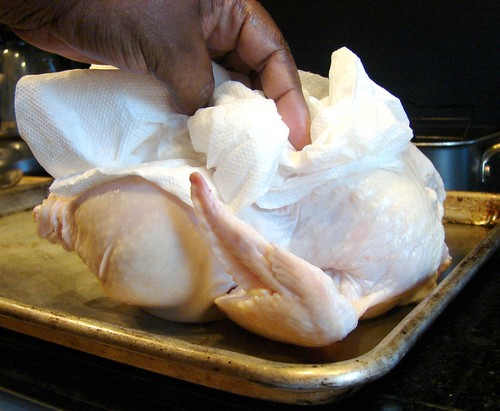
  • 4-6 pound Whole Chicken (Remove giblets from cavity. Wash and pat dry with paper towels)
  • Salt, Pepper and Sage to taste
  • Lather chicken with 1/4 cup oil or butter
  • 3-4 Rosemary Sprigs
  • Lemon for the chicken
  • 1/4 c. water
  • 1/4.c white wine

Preheat oven to 450 F.

CHICKEN PREPARATION: In a bowl mix 3/4 tsp, salt and 1/2 tsp pepper, 3/4 tsp sage, set aside. Rub vegetable or olive oil, or butter onto the chicken, this will reduce the water loss from the chicken and maintain a juicier bird. Rub seasonings onto all sides of chicken and inside of the cavity (Use all the seasoning!) Squeeze the juice of 1 lemon into the cavity of the chicken and then place  the lemon halves into the chicken cavity. (Moisture tip: align bacon strips on top of chicken.)

ROASTING INSTRUCTIONS:

  1. In a roasting pan, (if available use a roasting rack) rest 4 rosemary sprigs about 3-5 inches in length on bottom of pan.
  2. Place chicken on top of rosemary.
  3. Add water and wine. (If desired, spoon raw vegetables around chicken.) Cover pan with tinfoil.
  4. Place chicken into oven, reduce temperature to 375F.
  5. Allow chicken to bake in oven covered for 60 minutes. Remove tinfoil, let chicken finish baking for 30 minutes. 
  6. Check temperature of bird by placing thermometer into between the breast and the thigh of bird without touching the bone. Internal temperature should be 165 F. Fluids should run clear when the chicken is done.

TOTAL COOKING TIME depends on the size of the bird. Allow the chicken to cook 20 minutes per pound. ADJUST ACCORDINGLY if roasting pan has no water add 1/2 cup. IF the bird is juicy and there is and abundance of water remove aluminum foil.

Ingredients for vegetables

Roasted Vegetables

  • 3 onions peeled and quartered
  • 4-6 potatoes washed and quartered (optional peeled)
  • 4 Carrots quartered
  • 3 Zucchini’s quartered (lightly salted to remove bitterness)
  • Mushroons
  • 1 tsp Salt
  • 1/4 Pepper to taste
  • 1 tsp Turmeric
  • 2 Whole Garlic Cloves (peeled and minced)
  • 1/4 c. Olive Oil

In a separate oven proof dish, add all ingredients and mix well with a spoon.  Place into oven and allow to bake along side chicken for 1 hour.