Foods to Reduce Bloating & Promote Diet

Fruits, Vegetables and Grains may be temporarily interfering with your weight-loss.

Making life changes to promote better health is a big step to an individual’s success. Excitement and encouragement build as the pounds are coming off, a reflection of looking thinner in the mirror and energy levels that  improve.

But a few weeks later, after making the full switch over to more “weight-loss friendly foods”, the stomach may appear larger. Stomach Bloat!  Underlying causes are numerous and include: low stomach acid, low digestive enzymes, stress, food intolerance, poor gut motility and gut dysbiosis.  The first step that most Doctors and Dietitians will advice are dietary changes.

Your meals may include more  fiber than before  and the body may not have adjusted to it yet.  The result being stomach distention and you’re left with a bloated, puffy feeling in your lower abdomen.

Eat more of these listed Foods to Reduce bloating/gas/distention:

Eat Asparagus
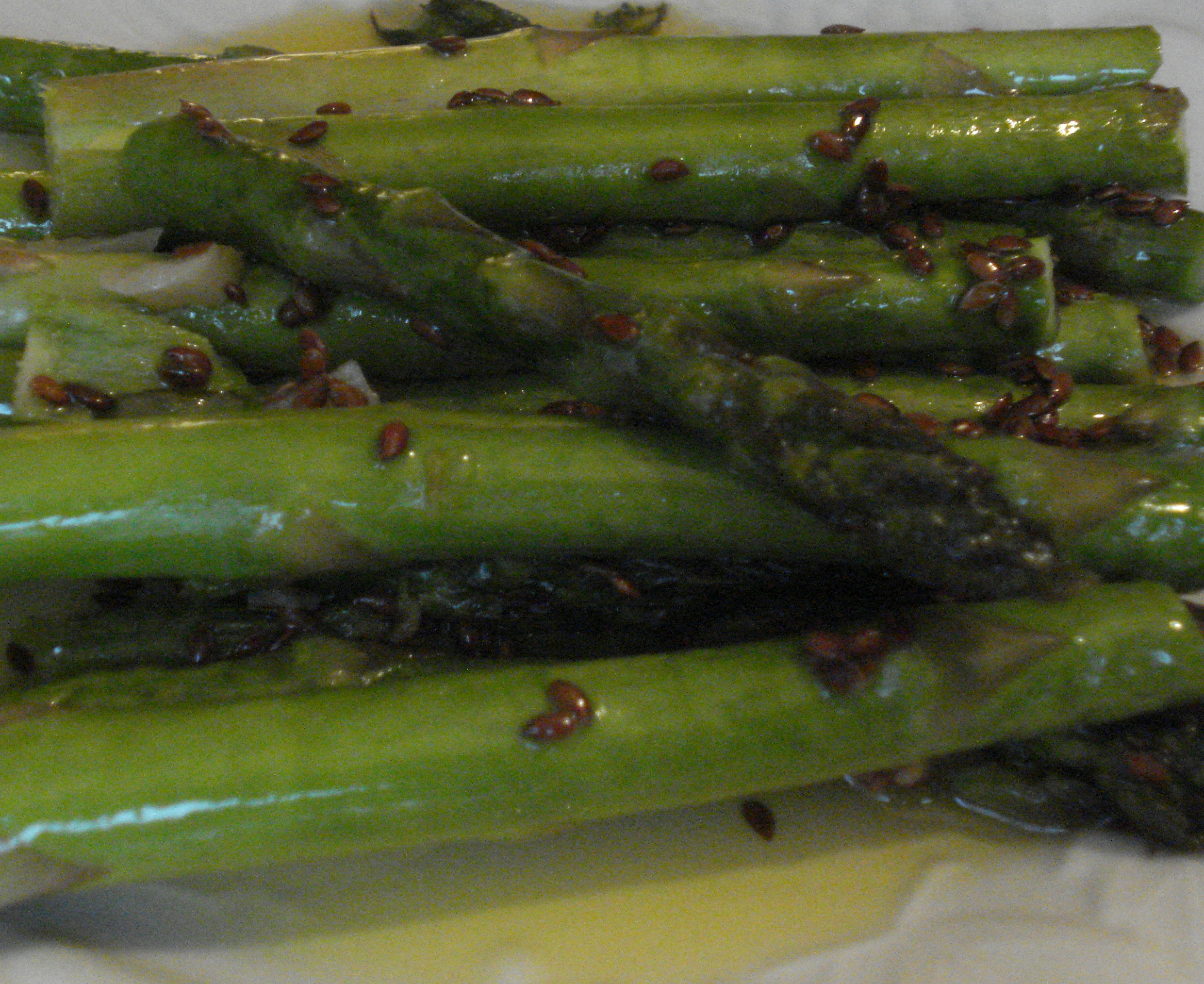
Asparagus a great, low-calorie side-dish for your meals, it also works well to stop the bloat.  There are certain compounds in the vegetable that promote the growth of certain bacteria in the intestines, which will then serve to increase the movement of food through the colon. Asparagus is versatile in food preparation:  eaten raw, grilled, or boiled and seasoned.


Try Papaya served with Salmon.

While you might commonly reach for an apple when on a diet, a better fruit to consider is papaya. Loaded with plenty of antioxidants and low in calories as well, it has a digestive enzyme called papain in it, which aids with the digestion and breakdown of protein by the body. While Salmon, high in omega-3’s promotes HDL cholesterol and reduces inflammation in the body.

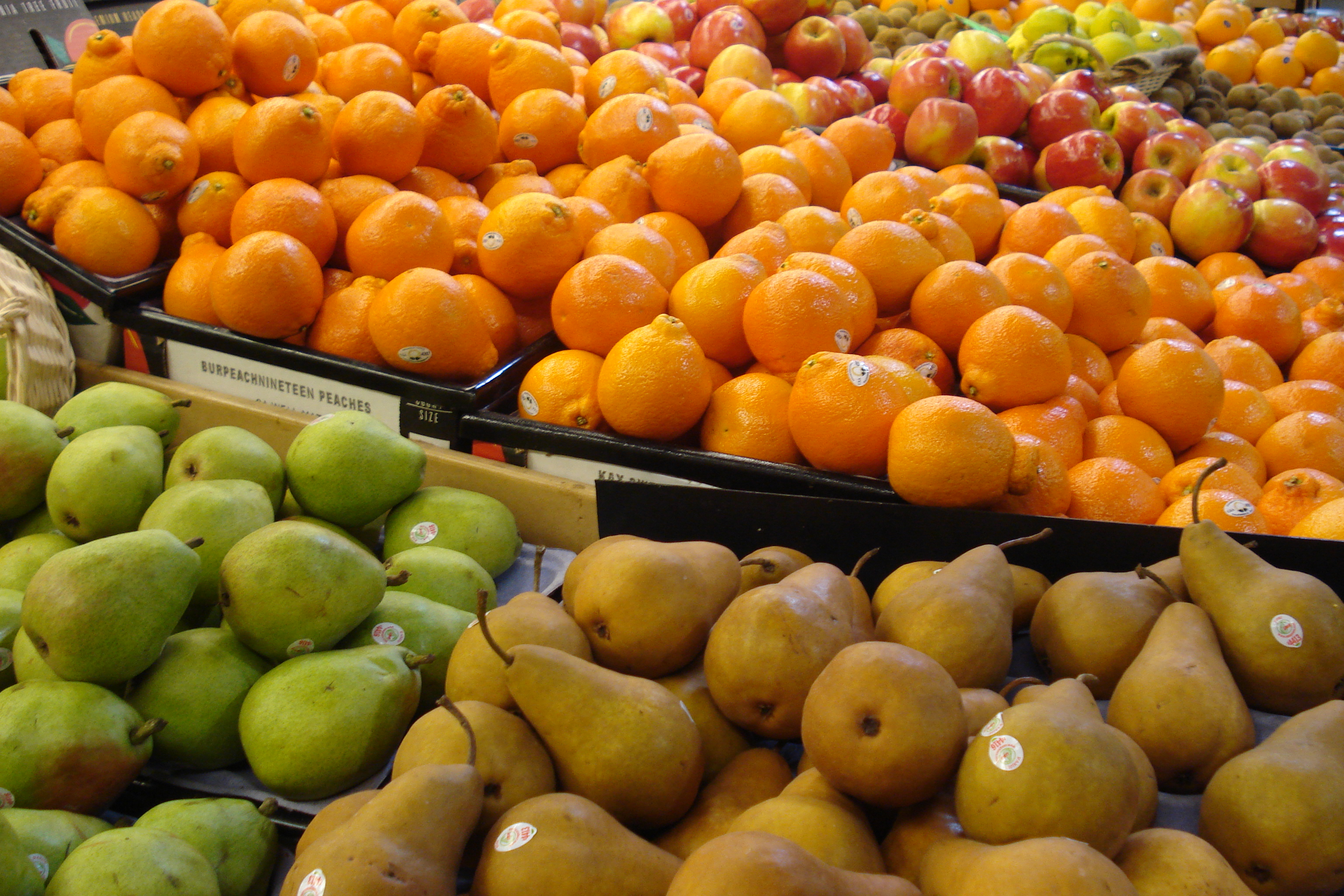
Add Other Low Fiber Fruits:  Grapes, Kiwi, Plums Nectarines, Cherries.  Peel skin from other fruits before eating in order to reduce bloating.

Drink Water with Mint Leaves and Lemon Slices.  Also Tea’s.

Another great way to put a stop to the bloated feeling is to drink water with peppermint leaves and lemon slices.
Lemon Water . Lemons contain malic acid, a common ingredient used in over the counter “upset stomach” medication, which reduces the negative effects  that contribute to gas and bacteria.
Tea’s: Peppermint, Ginger, Fennel tea’s all  have a soothing effect on the stomach.

Include more: Celery, Fennel, Carrots, Various  types of Squash

Most diets will contain celery and carrots  since they are a low cal option.  Also try  Fennel;  served as raw slices, or steamed with olive oil and 1/2 tsp of minced garlic.  Squash seasoned with ginger, in which both contribute to reduction of bloating.  Even a small amount can really help to flush out the system and remove unwanted water weight.

Research from the Mayo Clinic suggests……….. 

Avoid foods that affect you most.   Foods high in Sugar and Carbonated Drinks are common offenders. However, “healthy food” may also not work with your bio-chemistry and may have to be reduced in your dietary intake: Beans, Peas, Lentils, Cabbage, Onions, Broccoli, Cauliflower, Bananas, Oranges, Raisins, Whole-Wheat Bread, Salads.  If dairy products are a problem, try low-lactose or lactose-free varieties.

  • Eat fewer fatty foods.

Fat slows digestion, giving food more time to ferment.

  • Temporarily cut back on high-fiber foods.
Fiber aids digestion, but many high-fiber foods are also great gas producers (apples, pears, peaches).  After a break, slowly add them back into your daily consumption and PEEL the skin before eating the fruit. You may also add products such as Beano to high-fiber foods to help reduce the amount of gas they produce.

  • Eat slowly Try to make meals relaxed occasions. Eating when you’re stressed or on the run can interfere with digestion.
  • Get moving.  It may help to take a short walk after eating. It’s been found that a  brisk 10 minute walk before a meal and after a meal will assist in digestion.
  • Try an over-the-counter remedy. If needed, talk to your Doctor about using products such as Lactaid or Dairy Ease, which can help digest lactose. Products containing simethicone can break up the bubbles in gas.

Once every three days try one of these tips and document your results.  Become more informed about your body, so that you can better communicate with your Doctor, or Dietitian.  By doing so you can avoid uneccessary tests and narrow down the problem that needs to be targeted and be more comfortable with your body.

Kimberly Crocker

References

http://www.mayoclinic.com/health/gas-and-gas-pains/DG00014/NSECTIONGROUP=2

http://www.thefooddoctor.com/Bloating-Ahealth_fdw_bloat/
Cure Gas Pains, Stomach Ache. Drink Lemon Water

3 Easy Steps Each Day to a Healthy You

Eggplant Parmigiana

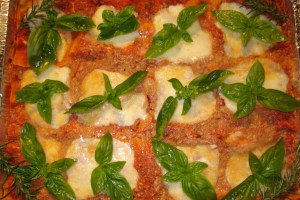
Eggplant presented with fresh basil leaves.

Many styles of Eggplant Parmigiana have been made and written about, but the original recipe still stands tried and proven. This is a dish that you just have to go with and enjoy, don’t count calories or you can miss the moment of sheer enjoyment as your palate will dance with delight. Buon Appetito!

Preheat oven to 400F or 180 C.  Serves 12 persons.

SAUCE

  • 1 medium onion
  • 2 Tbsp Extra Virgin Olive Oil (EVOO)
  • 2 28 oz or 2 720 grams Tomato Sauce ( De Cecco or Fratelli)
  • 1 tsp salt
  • 1/4 cup milk
  • 8 Basil leaves (a few extra for presentation)

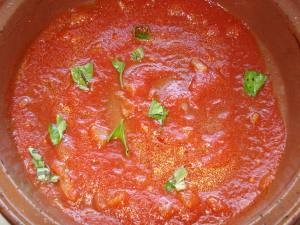
Delicious Tomato Basil Sauce for the Eggplant Parmigiana

In a medium size pan, sauté onion in olive oil for 5 minutes on medium low. Add tomato sauce, salt, milk (helps to reduce acidity of sauce which comes from the processed seeds.) Allow to simmer for 20 minutes. Add basil leaves to sauce at end of simmering time.

INGREDIENTS FOR EGGPLANT

  • 1 liter of vegetable oil
  • 1 Eggplant(2 if small) peeled and sliced into 1/3 inch round slices.
  • 1 Tbsp Salt
  • 1 cup Flour
  • 2 eggs (raw) beaten
  • 1/2 cup milk
  • 2 cups mozzarella
  • 1/2 cup parmesan cheese

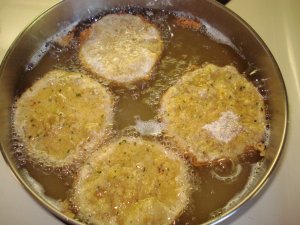
    After dredging the eggplant slices from four to egg batter (two times), add to hot oil to fry until golden brown.

(Some stores may sell eggplant slices already grilled and may be used instead.) Otherwise, wash,  peel and slice eggplant. Lightly salt all slices and set aside in colander for about 1 hour to allow for bitter water to come out from eggplant. Pat dry eggplant slices with paper towel.
Heat oil in a frying pan oven medium heat for 4 minutes.
Beat raw eggs. Add milk and continue to beat mixture until combined.
Take a slice of eggplant and dredge into flour then dip into the egg mixture, back again into flour and one last time into egg mixture. Place dipped and dredged eggplant into hot oil. Fry until both sides are golden. Remove from hot oil once golden and place onto a paper towel to absorb excess oil. Continue to follow same procedure for all eggplant slices.

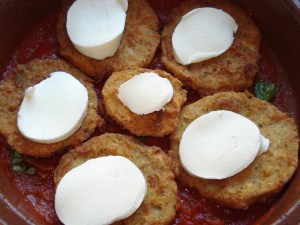
Alternate sauce, fried eggplant and mozzarella until the pan is 3/4 full.

ASSEMBLE
In a large baking pan ladle the pre made tomato sauce into pan, enough to cover the bottom of the pan. Organize 6-8 slices of fried eggplant into bottom of pan. Ladle sauce again into baking pan so that the eggplant are lightly covered in sauce. Layer with mozzarella and 2 tablespoon`s of parmesan cheese. Continue to follow assembling order until all eggplant has been used.

Place into a preheated oven of 400 F allow to bake for 30 minutes. Take out of the oven and allow to set for 30 minutes before eating.

Serve after allowing the eggplant to rest for at least 30 minutes. Extra delicious the day after!

Artichokes: Roasted, Boiled, Steamed, Microwaved

Stuffed artichokes are one of the most common ways of eating artichokes in Italy.  Provided are two different stuffing recipes for artichokes and two different methods for preparing them.

Native to the Mediterranean, the artichoke is harvested year-round, but more than half of the crop is
harvested between March and May.  The Fall crop usually peaks in October.  The ‘vegetable’ that we
eat is actually the plant’s flower bud.  Most people cook the whole artichoke and slip each petal, one
by one, through their teeth until they reach the tender heart which is entirely edible.    If you’re
intimidated by this unusual-looking vegetable, you’re not alone.  But once you learn the simple
procedure, preparing artichokes is easy.

Trimming an Artichoke

Add the juice from half a lemon to a large bowl of water.  Cut off the artichoke’s stem or peel the stem if it is
a tender baby artichoke.  Peel off the outer leaves starting from the bottom up.  Approximately, 2-3 layers, stop when tender leaves are reached. (Touch and compare to outer leaves to notice difference.)

Use a serrated knife to cut off the entire top one inch of the artichoke.  Gently separate the top
leaves and look into the bottom of the artichoke to find the fibrous choke in the center.  Use a spoon with a
serrated edge or a melon baller to scoop out the choke.  Rub the artichoke all over with lemon juice and
drop it into the lemon water.  Drain before using.

Steaming Artichokes:  Place whole, trimmed artichokes into a steamer basket or on artichoke steamer
racks and place into a deep saucepan with about 1 inch of water in the bottom of the pan.  Bring water to a
simmer, cover, and cook for 20 minutes depending on the size of the artichoke.  Artichokes are done
when the leaves pull of easily.

Boiling Artichokes:  Boiling is the common way of cooking artichokes.  Place whole for halved trimmed
artichokes in water so that the artichokes are almost covered.  Add flavorings such as lemon, garlic cloves,
and herbs to the water.  Simmer 20 minutes depending on the size of the artichoke.  Artichokes are
done when the leaves pull off easily.

Microwaving Artichokes:  Place trimmed artichokes stem up in a deep microwave-safe bowl.  Add 1-2
inches of water and cover bowl with plastic wrap.  Cook on high 7-10 minutes for medium artichokes and
12-15 minutes for jumbo artichokes.  Keep covered and let the artichokes rest for 5 minutes before serving.

Roasting Artichokes:  Cut trimmed medium size artichokes in half lengthwise.  Place cut sides down on
an oiled roasting pan.  Sprinkle with a few tablespoons of water and cover tightly with foil.  Roast in a 375
degree F. oven for 30 minutes or until tender.  Season with salt.

Artichokes Stuffed with Bread Crumbs, Olives,
Parmesan, Capers, and Herbs

6 medium artichokes
2 cups seasoned bread crumbs (recipe below)
1/2 medium onion, finely chopped
2 garlic cloves, finely chopped
2 tablespoons grated Parmesan cheese
4 ounces hard salami
4 ounces provolone or other hard cheese
Olive oil

Artichokes Stuffed with Bread Crumbs,
Salami and Provolone

Trim the artichokes as described above, removing only the tough bottom leaves and snipping the ends off the
others.  Leave the artichokes in the lemon water while you prepare the stuffing.

To make the stuffing:  You can use packaged seasoned bread crumbs or use the recipe below.
Place the bread crumbs, onion, garlic, and Parmesan in a bowl.
Put the salami and provolone in a food processor and process until finely chopped.
Add the salami and provolone to the bread crumb mixture.
Add a little olive oil just to moisten the mixture and help to hold it together.

Put some of the filling into the center of each artichoke and stuff some of the filling between some of the leaves.
Place a steamer basket or artichoke steamer racks into a deep saucepan with one inch of water.
Bring the water to a simmer.  Place the stuffed artichokes in the steamer basket.
Drizzle a little olive oil over each artichoke.
Cover the saucepan and steam the artichokes over the simmering water for about 45 minutes.
Test for doneness by pulling a leaf from an artichoke.
Remove the artichokes from the pan and allow to cool for 5-10 minutes before serving.

Serves 6

Seasoned Bread Crumbs
Seasoned bread crumbs are used in the above recipe for artichoke stuffing but
they can also be used as a costing for fried poultry, meat, fish, or vegetables.  You
can store the bread crumbs in storage bags in your freezer for up to a year.

4-5 cups coarse bread crumbs
3/4 cup Parmesan or Romano cheese
1-1/2 tablespoons dried oregano
1/2 tablespoon dried basil
1 teaspoon salt
1/2 teaspoon pepper
1 teaspoon garlic powder

Combine all ingredients until blended.

Risotto

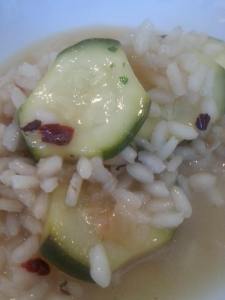
zucchini risottosRisotto is Italian comfort food which can be served simply by itself, or add in a choice of vegetables, seafood, or meat.

Ingredients
2 Tablespoons Olive Oil
1 teaspoon butter
1 Small onion or shallots
Arborio Rice 1 cup
1/2 cup wine
2 cups broth (water and 2 buollion cube)
Vegetables your choice (zucchini, peas, mushrooms, carrots)
IF USING Zucchini, slice 1-2 zucchini at 1/4″ or thinner, place into a colander and lightly salt. After 10 minutes, pat zucchini with a paper towel to absorb the moisture from the zucchini, set aside.

Directions

Heat 2 T of olive oil or butter in a well-seasoned, cast iron skillet (or the heaviest, non-stick skillet you have.) Add 1 pat of butter and chopped shallots or onions to the oil and sauté for 2-3 minutes over medium heat.
Add your Arborio rice. For this example, we’ll use 1 cup. This is enough to feed four to six as either a first course (the Italian tradition), or as a main course. Stir the rice well with the onions, butter and oil, because the purpose is to thoroughly “coat” the rice. This helps regulate absorption of the liquid. Add 1/2 cup of dry flavorful white wine.  When the wine is about 3/4’s absorbed, reduce the heat to the lowest setting if you are cooking in an iron skillet, (low medium if in anything else), and ladle in enough stock to cover the smoothed out risotto. When the added liquid level drops about 1/3, re-cover the risotto with more stock. Continue this process for about 20 minutes. At about 10 minutes of stirring rice add your vegetables, (Peas are added only at the last two minutes of cooking.) When the stock absorption rate slows down considerably. The end of the cooking is critical for the final texture of the dish, so when the rice is mostly tender, but with just a hint of texture to it, and the liquid you have added to this point is mostly absorbed, add the Parmesean and 2 T of butter. At this point, stir the risotto to blend in the cheese and remove your finished risotto from the heat.

Biscotti

BiscottiA favorite  italian cookie known internationally and simply called “Biscotti” is easy to make and enjoyable to eat. Bis meaning twice and cotti means baked. A twice baked cookie, that is double the fun, whether with friends or by yourself while reading a book! Buon Appetito!

Pre-heat oven to 350 F (180 C)

Place Almonds on a cookie sheet and place into heated oven allow to roast for 10 minutes on 350 F (180 C). Allow to cool 20 minutes. (Optional, may chop almonds in food processor.)


Ingredients
1 1/2 cup Almonds (approximately 250-300 grams)

2 cups Flour
1 tsp Baking Powder (Pane degli Angeli Lievito Dolce)
3/4 cup sugar
1/8 tsp salt
3 eggs
1 tbsp Lemon or Orange Zest
Optional ingredients for Biscotti in the amount of 250-300 grams total weight: Dried fruits, Nuts, Raisins, Chocolate chips.
Parchment paper for cookie sheet (or non-stick cookie sheet by itself is fine)

In a large mixing bowl use a fork to combine flour, baking powder, sugar, salt and lemon/orange zest (optional). In a separate bowl whisk eggs. Slowly, add a portion of whisked eggs to dry ingredients and using a fork to combine. Add almonds (or desired recommended optional ingredients) along with rest of eggs using your hands to combine and to form Biscotti dough into a log about 14 inches long and 3-4 inches wide. Gently place it onto (parchment paper lined or non stick) cookie sheet.

Place into oven and bake at 350 F (180 C) for 30 minutes. Cookie log is done when it is firm to touch. Remove from oven and allow to cool for 10 minutes. Once cooled, with a serrated knife, work from end of cookie and start to slice diagonally. Each diagonal cut should give you a cookie about 1/2 inch in width. Place slice cookies onto a cookie sheet and place back into oven allowing to bake for 10 minutes on 350 F (180 C). Remove from oven when cookies are slightly golden. Biscotti cookies are hard and perfect for dipping in coffee, tea or Vin Santo liqueur.