LIFESTYLE, LIFE CHANGING, LONGEVITY. The foundation of Eat Know How Cooking Classes remains The Mediterranean Diet. Those who live on the mediterranean coast organize their meals from local shopping, to seasonal meal preparation and order of food consumption. Affirmation of what the mediterranean people have
understood for 1000’s of years, a dietary intake high in grains, vegetables, fish, oil, and wine promotes an individual’s overall health. A recent study released by the New England Journal of Medicine, was quickly halted, realizing that by not releasing the information, they would do the country harm instead of showing the positive results from their research. The following study is the copied research, documented in it’s entirety. Take a moment to explore what the doctors, researchers and dietitians quickly observed from their study.
Methods
Study Design
The PREDIMED trial (Prevención con Dieta Mediterránea) was a parallel-group, multicenter, randomized trial. Details of the trial design are provided elsewhere.10-12 The trial was designed and conducted by the authors, and the protocol was approved by the institutional review boards at all study locations. The authors vouch for the accuracy and completeness of the data and all analyses and for the fidelity of this report to the protocol, which is available with the full text of this article at NEJM.org.
Supplemental foods were donated, including extra-virgin olive oil (by Hojiblanca and Patrimonio Comunal Olivarero, both in Spain), walnuts (by the California Walnut Commission), almonds (by Borges, in Spain), and hazelnuts (by La Morella Nuts, in Spain). None of the sponsors had any role in the trial design, data analysis, or reporting of the results.
Participant Selection and Randomization
Eligible participants were men (55 to 80 years of age) and women (60 to 80 years of age) with no cardiovascular disease at enrollment, who had either type 2 diabetes mellitus or at least three of the following major risk factors: smoking, hypertension, elevated low-density lipoprotein cholesterol levels, low high-density lipoprotein cholesterol levels, overweight or obesity, or a family history of premature coronary heart disease. Detailed enrollment criteria are provided in the Supplementary Appendix, available at NEJM.org. All participants provided written informed consent.
Beginning on October 1, 2003, participants were randomly assigned, in a 1:1:1 ratio, to one of three dietary intervention groups: a Mediterranean diet supplemented with extra-virgin olive oil, a Mediterranean diet supplemented with nuts, or a control diet. Randomization was performed centrally by means of a computer-generated random-number sequence.
Interventions and Measurements

Fish is a critical “Protein” in the lifestyle. Light, easy to digest, a good source of Vitamin B 12, Omega 3, & minerals.
The dietary intervention8,10-13 is detailed in the Supplementary Appendix. The specific recommended diets are summarized in Table 1Table 1 Summary of Dietary Recommendations to Participants in the Mediterranean-Diet Groups and the Control-Diet Group.. Participants in the two Mediterranean-diet groups received either extra-virgin olive oil (approximately 1 liter per week) or 30 g of mixed nuts per day (15 g of walnuts, 7.5 g of hazelnuts, and 7.5 g of almonds) at no cost, and those in the control group received small nonfood gifts. No total calorie restriction was advised, nor was physical activity promoted.
For participants in the two Mediterranean-diet groups, dietitians ran individual and group dietary-training sessions at the baseline visit and quarterly thereafter. In each session, a 14-item dietary screener was used to assess adherence to the Mediterranean diet8,14 (Table S1 in the Supplementary Appendix) so that personalized advice could be provided to the study participants in these groups.
Participants in the control group also received dietary training at the baseline visit and completed the 14-item dietary screener used to assess baseline adherence to the Mediterranean diet. Thereafter, during the first 3 years of the trial, they received a leaflet explaining the low-fat diet (Table S2 in the Supplementary Appendix) on a yearly basis. However, the realization that the more infrequent visit schedule and less intense support for the control group might be limitations of the trial prompted us to amend the protocol in October 2006. Thereafter, participants assigned to the control diet received personalized advice and were invited to group sessions with the same frequency and intensity as those in the Mediterranean-diet groups, with the use of a separate 9-item dietary screener (Table S3 in the Supplementary Appendix).
A general medical questionnaire, a 137-item validated food-frequency questionnaire,15 and the Minnesota Leisure-Time Physical Activity Questionnaire were administered on a yearly basis.10 Information from the food-frequency questionnaire was used to calculate intake of energy and nutrients. Weight, height, and waist circumference were directly measured.16 Biomarkers of compliance, including urinary hydroxytyrosol levels (to confirm compliance in the group receiving extra-virgin olive oil) and plasma alpha-linolenic acid levels (to confirm compliance in the group receiving mixed nuts), were measured in random subsamples of participants at 1, 3, and 5 years (see the Supplementary Appendix).
End Points
The primary end point was a composite of myocardial infarction, stroke, and death from cardiovascular causes. Secondary end points were stroke, myocardial infarction, death from cardiovascular causes, and death from any cause. We used four sources of information to identify end points: repeated contacts with participants, contacts with family physicians, a yearly review of medical records, and consultation of the National Death Index. All medical records related to end points were examined by the end-point adjudication committee, whose members were unaware of the study-group assignments. Only end points that were confirmed by the adjudication committee and that occurred between October 1, 2003, and December 1, 2010, were included in the analyses. The criteria for adjudicating primary and secondary end points are detailed in the Supplementary Appendix.
Statistical Analysis
We initially estimated that a sample of 9000 participants would be required to provide statistical power of 80% to detect a relative risk reduction of 20% in each Mediterranean-diet group versus the control-diet group during a 4-year follow-up period, assuming an event rate of 12% in the control group.10,17 In April 2008, on the advice of the data and safety monitoring board and on the basis of lower-than-expected rates of end-point events, the sample size was recalculated as 7400 participants, with the assumption of a 6-year follow-up period and underlying event rates of 8.8% and 6.6% in the control and intervention groups, respectively. Power curves under several assumptions can be found in Figure S1 in the Supplementary Appendix.
Yearly interim analyses began after a median of 2 years of follow-up. With the use of O’Brien–Fleming stopping boundaries, the P values for stopping the trial at each yearly interim analysis were 5×10⁻⁶, 0.001, 0.009, and 0.02 for benefit and 9×10⁻⁵, 0.005, 0.02, and 0.05 for adverse effects.18 The stopping boundary for the benefit of the Mediterranean diets with respect to the primary end point was crossed at the fourth interim evaluation; on July 22, 2011, the data and safety monitoring board recommended stopping the trial on the basis of end points documented through December 1, 2010.
All primary analyses were performed on an intention-to-treat basis by two independent analysts. Time-to-event data were analyzed with the use of Cox models with two dummy variables (one for the Mediterranean diet with extra-virgin olive oil and another for the Mediterranean diet with nuts) to obtain two hazard ratios for the comparison with the control group. To account for small imbalances in risk factors at baseline among the groups, Cox regression models were used to adjust for sex, age, and baseline risk factors. We tested the proportionality of hazards with the use of time-varying covariates. All analyses were stratified according to center. Prespecified subgroup analyses were conducted according to sex, age, body-mass index (BMI), cardiovascular-risk-factor status, and baseline adherence to the Mediterranean diet. Sensitivity analyses were conducted under several assumptions, including imputation of data for missing values and participants who dropped out (see the Supplementary Appendix).
Results
Baseline Characteristics of the Study Participants
From October 2003 through June 2009, a total of 8713 candidates were screened for eligibility, and 7447 were randomly assigned to one of the three study groups (Figure S2 in the Supplementary Appendix). Their baseline characteristics according to study group are shown in Table 2Table 2 Baseline Characteristics of the Participants According to Study Group.. Drug-treatment regimens were similar for participants in the three groups, and they continued to be balanced during the follow-up period (Table S4 in the Supplementary Appendix).
Participants were followed for a median of 4.8 years (interquartile range, 2.8 to 5.8). After the initial assessment, 209 participants (2.8%) chose not to attend subsequent visits, and their follow-up was based on reviews of medical records. By December 2010, a total of 523 participants (7.0%) had been lost to follow-up for 2 or more years. Dropout rates were higher in the control group (11.3%) than in the Mediterranean-diet groups (4.9%) (Figure S2 in the Supplementary Appendix). As compared with participants who remained in the trial, those who dropped out were younger (by 1.4 years), had a higher BMI (the weight in kilograms divided by the square of the height in meters; by 0.4), a higher waist-to-height ratio (by 0.01), and a lower score for adherence to the Mediterranean diet (by 1.0 points on the 14-item dietary screener) (P<0.05 for all comparisons).
Compliance with the Dietary Intervention
Participants in the three groups reported similar adherence to the Mediterranean diet at baseline (Table 2, and Figure S3 in the Supplementary Appendix) and similar food and nutrient intakes. During follow-up, scores on the 14-item Mediterranean-diet screener increased for the participants in the two Mediterranean-diet groups (Figure S3 in the Supplementary Appendix). There were significant differences between these groups and the control group in 12 of the 14 items at 3 years (Table S5 in the Supplementary Appendix). Changes in objective biomarkers also indicated good compliance with the dietary assignments (Figure S4 and S5 in the Supplementary Appendix).
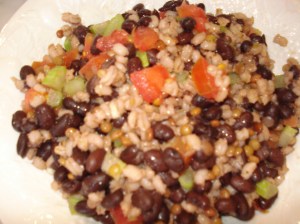
Legumes, olive oil, nuts and grains were an important part of the study.
Participants in the two Mediterranean-diet groups significantly increased weekly servings of fish (by 0.3 servings) and legumes (by 0.4 servings) in comparison with those in the control group (Table S6 in the Supplementary Appendix). In addition, participants assigned to a Mediterranean diet with extra-virgin olive oil and those assigned to a Mediterranean diet with nuts significantly increased their consumption of extra-virgin olive oil (to 50 and 32 g per day, respectively) and nuts (to 0.9 and 6 servings per week, respectively). The main nutrient changes in the Mediterranean-diet groups reflected the fat content and composition of the supplemental foods (Tables S7 and S8 in the Supplementary Appendix). No relevant diet-related adverse effects were reported (see the Supplementary Appendix). We did not find any significant difference in changes in physical activity among the three groups.
End Points
The median follow-up period was 4.8 years. A total of 288 primary-outcome events occurred: 96 in the group assigned to a Mediterranean diet with extra-virgin olive oil (3.8%), 83 in the group assigned to a Mediterranean diet with nuts (3.4%), and 109 in the control group (4.4%). Taking into account the small differences in the accrual of person-years among the three groups, the respective rates of the primary end point were 8.1, 8.0, and 11.2 per 1000 person-years (Table 3Table 3 Outcomes According to Study Group.). The unadjusted hazard ratios were 0.70 (95% confidence interval [CI], 0.53 to 0.91) for a Mediterranean diet with extra-virgin olive oil and 0.70 (95% CI, 0.53 to 0.94) for a Mediterranean diet with nuts (Figure 1Figure 1
 Kaplan–Meier Estimates of the Incidence of Outcome Events in the Total Study Population.) as compared with the control diet (P=0.015, by the likelihood ratio test, for the overall effect of the intervention).
The results of multivariate analyses showed a similar protective effect of the two Mediterranean diets versus the control diet with respect to the primary end point (Table 3). Regarding components of the primary end point, only the comparisons of stroke risk reached statistical significance (Table 3, and Figure S6 in the Supplementary Appendix). The Kaplan–Meier curves for the primary end point diverged soon after the trial started, but no effect on all-cause mortality was apparent (Figure 1). The results of several sensitivity analyses were also consistent with the findings of the primary analysis (Table S9 in the Supplementary Appendix).
Subgroup Analyses
Reductions in disease risk in the two Mediterranean-diet groups as compared with the control group were similar across the prespecified subgroups (Figure 2Figure 2 Results of Subgroup Analyses., and Table S10 in the Supplementary Appendix). In addition, to account for the protocol change in October 2006 whereby the intensity of dietary intervention in the control group was increased, we compared hazard ratios for the Mediterranean-diet groups (both groups merged vs. the control group) before and after this date. Adjusted hazard ratios were 0.77 (95% CI, 0.59 to 1.00) for participants recruited before October 2006 and 0.49 (95% CI, 0.26 to 0.92) for those recruited thereafter (P=0.21 for interaction).
Discussion
In this trial, an energy-unrestricted Mediterranean diet supplemented with either extra-virgin olive oil or nuts resulted in an absolute risk reduction of approximately 3 major cardiovascular events per 1000 person-years, for a relative risk reduction of approximately 30%, among high-risk persons who were initially free of cardiovascular disease. These results support the benefits of the Mediterranean diet for cardiovascular risk reduction. They are particularly relevant given the challenges of achieving and maintaining weight loss. The secondary prevention Lyon Diet Heart Study also showed a large reduction in rates of coronary heart disease events with a modified Mediterranean diet enriched with alpha-linolenic acid (a key constituent of walnuts). That result, however, was based on only a few major events.4,19,20
There were small between-group differences in some baseline characteristics in our trial, which were not clinically meaningful but were statistically significant, and we therefore adjusted for these variables. In fully adjusted analyses, we found significant results for the combined cardiovascular end point and for stroke, but not for myocardial infarction alone. This could be due to stronger effects on specific risk factors for stroke but also to a lower statistical power to identify effects on myocardial infarction. Our findings are consistent with those of prior observational studies of the cardiovascular protective effects of the Mediterranean diet,2,5 olive oil,21-23 and nuts24,25; smaller trials assessing effects on traditional cardiovascular risk factors6-9 and novel risk factors, such as markers of oxidation, inflammation, and endothelial dysfunction6,8,26-28; and studies of conditions associated with high cardiovascular risk — namely, the metabolic syndrome6,16,29 and diabetes.30-32 Thus, a causal role of the Mediterranean diet in cardiovascular prevention has high biologic plausibility. The results of our trial might explain, in part, the lower cardiovascular mortality in Mediterranean countries than in northern European countries or the United States.33
The risk of stroke was reduced significantly in the two Mediterranean-diet groups. This is consistent with epidemiologic studies that showed an inverse association between the Mediterranean diet2,34 or olive-oil consumption22 and incident stroke.
Our results compare favorably with those of the Women’s Health Initiative Dietary Modification Trial, wherein a low-fat dietary approach resulted in no cardiovascular benefit.35 Salient components of the Mediterranean diet reportedly associated with better survival include moderate consumption of ethanol (mostly from wine), low consumption of meat and meat products, and high consumption of vegetables, fruits, nuts, legumes, fish, and olive oil.36,37 Perhaps there is a synergy among the nutrient-rich foods included in the Mediterranean diet that fosters favorable changes in intermediate pathways of cardiometabolic risk, such as blood lipids, insulin sensitivity, resistance to oxidation, inflammation, and vasoreactivity.38
Our study has several limitations. First, the protocol for the control group was changed halfway through the trial. The lower intensity of dietary intervention for the control group during the first few years might have caused a bias toward a benefit in the two Mediterranean-diet groups, since the participants in these two groups received a more intensive intervention during that time. However, we found no significant interaction between the period of trial enrollment (before vs. after the protocol change) and the benefit in the Mediterranean-diet groups. Second, we had losses to follow-up, predominantly in the control group, but the participants who dropped out had a worse cardiovascular risk profile at baseline than those who remained in the study, suggesting a bias toward a benefit in the control group. Third, the generalizability of our findings is limited because all the study participants lived in a Mediterranean country and were at high cardiovascular risk; whether the results can be generalized to persons at lower risk or to other settings requires further research.
As with many clinical trials, the observed rates of cardiovascular events were lower than anticipated, with reduced statistical power to separately assess components of the primary end point. However, favorable trends were seen for both stroke and myocardial infarction. We acknowledge that, even though participants in the control group received advice to reduce fat intake, changes in total fat were small and the largest differences at the end of the trial were in the distribution of fat subtypes. The interventions were intended to improve the overall dietary pattern, but the major between-group differences involved the supplemental items. Thus, extra-virgin olive oil and nuts were probably responsible for most of the observed benefits of the Mediterranean diets. Differences were also observed for fish and legumes but not for other food groups. The small between-group differences in the diets during the trial are probably due to the facts that for most trial participants the baseline diet was similar to the trial Mediterranean diet and that the control group was given recommendations for a healthy diet, suggesting a potentially greater benefit of the Mediterranean diet as compared with Western diets.
In conclusion, in this primary prevention trial, we observed that an energy-unrestricted Mediterranean diet, supplemented with extra-virgin olive oil or nuts, resulted in a substantial reduction in the risk of major cardiovascular events among high-risk persons. The results support the benefits of the Mediterranean diet for the primary prevention of cardiovascular disease.”
With GREAT Appreciation to all of those who participated in and conducted the study, ~ Kimberly Crocker-Scardicchio
References
Primary Prevention of Cardiovascular Disease with a Mediterranean Diet
February 25, 2013DOI: 10.1056/NEJMoa1200303
Ramón Estruch, M.D., Ph.D., Emilio Ros, M.D., Ph.D., Jordi Salas-Salvadó, M.D., Ph.D., Maria-Isabel Covas, D.Pharm., Ph.D., Dolores Corella, D.Pharm., Ph.D., Fernando Arós, M.D., Ph.D., Enrique Gómez-Gracia, M.D., Ph.D., Valentina Ruiz-Gutiérrez, Ph.D., Miquel Fiol, M.D., Ph.D., José Lapetra, M.D., Ph.D., Rosa Maria Lamuela-Raventos, D.Pharm., Ph.D., Lluís Serra-Majem, M.D., Ph.D., Xavier Pintó, M.D., Ph.D., Josep Basora, M.D., Ph.D., Miguel Angel Muñoz, M.D., Ph.D., José V. Sorlí, M.D., Ph.D., José Alfredo Martínez, D.Pharm, M.D., Ph.D., and Miguel Angel Martínez-González, M.D., Ph.D. for the PREDIMED Study Investigators
http://www.nejm.org/doi/full/10.1056/NEJMoa1200303?query=featured_home&#t=articleBackground













 Eat Know How
You must be logged in to post a comment.