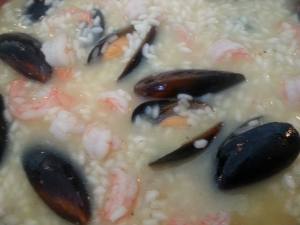
Seafood Risotto

Risotto is Italian comfort food which can be served simply by itself, or add in a choice of 1012686_10203306633251620_1396685508_nvegetables, seafood, or meat.

Ingredients

1/2 garlic clove, minced
1/2 teaspoon salt
1/2 teaspoon red pepper flakes
1/3 cup of white wine
Select seafood of choice: mussels, shrimp, clams, calamari, or octopus.
2 Tablespoons Olive Oil
1 teaspoon butter
1 Small onion or shallots
Arborio Rice 1 cup
1/2 cup wine
2 cups broth (water and 2 buollion cube)

Directions

Place seafood into a bowl with garlic clove,  salt,  red pepper flakes, white wine. Set aside.

Heat 2 T of olive oil and butter in a well-seasoned, cast iron skillet (or the heaviest, non-stick skillet you have.) Add 1 pat of butter and chopped shallots or onions to the oil and sauté for 2-3 minutes over medium heat.
Add your Arborio rice. For this example, we’ll use 1 cup. This is enough to feed four to six as either a first course (the Italian tradition), or as a main course. Stir the rice well with the onions, butter and oil, because the purpose is to thoroughly “coat” the rice. This helps regulate absorption of the liquid. Add 1/2 cup of dry flavorful white wine.  When the wine is about 3/4’s absorbed, reduce the heat to the lowest setting if you are cooking in an iron skillet, (low medium if in anything else), and ladle in enough stock to cover the smoothed out risotto. When the added liquid level drops about 1/3, re-cover the risotto with more stock. (Continue this process for about 20 minutes.) At about 15 minutes of stirring rice add your add all ingredients from seafood bowl into risotto.

The end of the cooking is critical for the final texture of the dish, so when the rice is mostly tender, but with just a hint of texture to it, and the liquid you have added to this point is mostly absorbed, add the Parmesan.  At this point, stir the risotto to blend in the cheese and remove your finished risotto from the heat.

Mediterranean Diet vs. Cancer Clinical Trials

Lower incidents of cancer and “arrest progression” of  Breast, Colon, and Prostate, as well as a slowed “Aging” process across all micro organisms, are being attributed to nutrients consumed from the Mediterranean Diet.  Organs effected by Alzheimer, Cardiovascular, Diabetes, Hypertension, and Parkinson Disease once thought to be pre-dispositioned diseases, are now completely avoided due to the higher intake of a plant based-fish/poultry diet that includes a lifestyle change with exercise. In order to understand nutrition related disease we first have to address nutritional intake for the Standard American Diet (S.A.D.) and understand what nutrients are common within the Mediterranean Diet that promote well-being.

Compare and Contrast the Standard American Diet (SAD) to the Mediterranean Diet on the following pie charts:

Standard American Diet: 2,594 cals/day

Caloric Sweeteners, Flour, and Cereal Products make up 41% of the S.A. D., Fruits and Vegetables are only 7% of the S.A.D.

Standard American Diet
Fruit/Vegetable 205 .08%
Fats 340 13%
Dairy 256 10%
Sweeteners 440 0.17%
Pork/Meat/Chxn 298 0.11%
Nuts 175 .07%
Pasta/Bread 619 23%
 Calories/day 2,594

Two critical points that Doctors raise as red flags. 1. Higher amounts of calories are  in the Standard American Diet. 2 Empty calories that promote aging is due to how the body is required to process calories that the body cannot use and have small to no amount of  vitamins, minerals, or antioxidants available.

Chemical Sweeteners and Refined Flour

  1. In contrasting the diets, note that 41% of the Standard American Diet is dedicated to the consumption of chemical sweeteners, refined flour, and cereal products.
  2. The Mediterranean Diet has no chemical sweeteners and only 17% of the dietary intake is in pasta and breads.
Calories Mediterranean Diet
Fruit/Vegetable 400 22%
Olive Oil 360 20%
Dairy 257 15%
Wine/Liquor 150 0.09%
Pork/Fish/Chxn 105 0.06%
Nuts 175 1%
Pasta/Bread 300 17%
 Calories/day 1747

Fats, Oil and Dairy products are almost an even draw in calories.

S.A.D 596 calories or 23% of dietary intake  vs Mediterranean Diet 617 or  35% of dietary intake.

  1. S.A.D. utilizes fats such as Margarine, Canola Oil, Butter, and processed cheese.
  2. Mediterranean Diet utilizes Olive Oil (3 Tbsp/day), daily fresh made or aged cheese.

So far the Standard American Diet in just two arguments has shown that 1,655 calories, or 64% of an average American’s diet is composed of sweeteners, refined flour, and processed saturated animal fat. The Mediterranean Diet demonstrates that 917 calories, or  52% of it’s nutritional intake comes from grains, refined flour, plant based oil, and freshly made or aged saturated animal fat.

S.A.D. Protein intake is 473 calories or 18% vs. Mediterranean Diet 235 calories or 13% of total intake.

  1. S.A.D. is heavily loaded with red meat some chicken / pork and low amounts of fish. It is important to note that red meat has 92 calories per ounce.
  2. Mediterranean Diet loads up on fish, poultry and some pork with red meat entering their dietary intake only once every 7-10 days. White meats and fish range from 32-37 calories per ounce are easy to digest and the amount of available oils high in omega 3 promotes healthy organs.

Protein intake is a critical part of everyone’s diet. Vitamins B12 & B16 are most prominent in meats and provide nutrition for the central nervous system.  However, balance is most important when consuming protein. Omega 3 and Protein are in all the meats, fish, and poultry, however the omega-3 is in higher amounts within certain fish (Anchovies, Sardines, Herring, Mackerel, Salmon) also easier to digest. Red meat can take 48-72 hours to digest, therefore a contributor to the aging process of the body as organs endure a work out to utilize and expel what is not needed. In many cases saturated fat is then deposited into the arteries and begin to engulf the organs.

Benefits of Fruits, Vegetables, Herbs, Spices, and Resveratrol

  1. S.A.D. shows that Americans consume only 205 calories or .08% of fruits and vegetables through out the day. (Eat the skin if not hard or bitter.)
  2. Those who follow the Mediterranean Diet are more likely to consume 400 calories or 22% of fruits and vegetables through out the day. Consuming wholesome nutrients found within natural wrappers provides the human body systems with vitamins and minerals that it needs to function daily.

    Free Radicals expedite the aging process by harming the cell membrane. Anti-oxidants neutralize the free radicals, and therefore protect all cell membranes. Eat a variety of colorful fruits, vegetables, herbs, and spices to keep your body loaded up on anti-oxidants.

Clinical trials are executing nutrition in plant extract form as a way of combatting disease and researching compounds that come from Mediterranean herbs and spices:

  • Basil / Bay Leaves:  Antibacterial, antiviral, and antioxidant properties. New evidence suggests basil can decrease carcinogenesis, and help protect against the proliferation of cervical cancer (HeLa cells).
  • Cardamom: Is loaded with anti oxidants that purge the body from free radicals that help prevent multiple forms of cancer. Found to be anti-proliferatvie, anti-invasive, anti-inflammatory, anti-angiogenic. Colon Cancer
  • Oregano: Has flavonoids and phenolic acids (antimicrobial properties) found to prevent colon cancer and restrict growth of malignant cancer cells
  • Rosemary: Aids in preventing oxidative stress which causes prostate and ovarian cancer

Studies have shown utilizing plant extracts from Mediterranean Spices that are linked to reduced incidents of cancer or arrested progression of cancer are:

  • Cinnamon / Cloves: Increased levels of iron and calcium are components that may be attributes of the anti carcinogenic, pro-apoptotic, anti-proliferative properties. Cervical Cancer, Colon Cancer.
  • Ginger: Has shown that it inhibits cancer cell growth in prostate cancer patients.
  • Sumac: Has both anti-oxidants and anti-microbial properties, preventing the on set of cancer.
  • Turmeric:  Contains anti-oxidant, anti-inflammatory, anti-viral, anti-bacterial, anti-fungal, and anti-carcinogenic activities and thus has a potential against various malignant diseases, diabetes, allergies, arthritis, Alzheimer’s disease, Breast Cancer, Colon Cancer and other chronic illnesses.  Plant based resveratrol is known to slow the aging process and is tested to see which cancers that it can prevent, arrest, and cure.  “Resveratrol (1 mg/kg orally) reduced the number and size of the esophageal tumors in rats treated with a carcinogen; and in several studies, small doses (0.02–8 mg/kg) of resveratrol, given prophylactically, reduced or prevented the development of intestinal and colon tumors in rats given different carcinogens. Similarly, topical application of resveratrol in mice, both before and after the UVB exposure, inhibited the skin damage and decreased skin cancer incidence.”

Add resveratrol to your meals, finding it within a variety of sources: purple grapes, cranberries, blueberries, peanuts, pomegranate and Italian Red Wine.

Making small dietary changes will promote overall health and reduce incidence of nutrition related disease and cancers, therefore leading to days of improved strength, stamina, and endurance.

By: Kimberly Crocker-Scardicchio

References

Reduce 500 Calories a day, Lose 1 pound per Week

Condiment & Fats can be Substituted to achieve Weight Loss 

Add fruit to smaller size sliced cake and reduced fat whip cream in order to save on calorie intake. The body burns more calories when digesting fruit.

A deficit of 690 calories a day is an investment in losing 1 pound (.454 g) a week. Simply by cutting 500 meal calories throughout the day will reset your week to weight loss success! Add in quick pace walk (4.0 mph) for 30 minutes/day, to benefit from another 190 lost calories. Combining a decrease in dietary intake and an increase in exercise in order to help gain control of realizing your dream to a healthier and more fit You! At only takes moderation and modification to lose a total of 3,500 calories a week=1 pound weight loss.

Tweek a recipe by substituting ingredients or changing the cooking technique. The USDA Dietary Guidelines for Americans emphasizes we need to reduce the amount of fat, sodium (salt) and added sugar we consume and increase our consumption of fiber. The fact sheet below provides suggestions to decrease the amount of fat, sugar, and salt (sodium) in your recipes, optimizing a nutritious meal without the extra calories.

In order to achieve a higher fiber intake, add fruit, nuts or rolled oats to cakes or cookies, thereby, increasing total fiber intake. Remember you can experiment with recipes and change ingredients. You may also be able to find other recipes that are similar to yours that have less fat, sugar, salt, and have more additions of nutritious ingredients.

Tips to decrease total fat
Most recipes can substitute a healthy plant oil for animal fat. Use 25% less liquid oil or solid fat called for in the recipe. If recipe calls for 1 cup use ¾ cup. Use equal amounts of oil for melted shortening, margarine or butter. HEALTHY OILS: Olive Oil, Canola Oil

Shortening and butter in baking, exchanged for:
25% reduction of fat in recipe. May also use applesauce, prune puree, or yogurt to replace butter, shortening, or olive oil in cakes. May need to shorten baking time by 10 minutes to avoid a dry cake. It’s always better to add polyunsaturated fats (plant based fat) to food instead of saturated fat (animal based dairy), by doing so total cholesterol is in line with body’s needs.

Whole milk, half and half or evaporated milk
Can be replaced
with skim milk, 1% milk, evaporated skim milk, fat-free half and half , or plain soymilk with calcium.

Butter, margarine exchanged for reduced amounts of olive oil to prevent sticking. Fat to sauté or stir-fry.
When sauteing foods reduce calorie intake by: olive oil, canola oil, or using cooking spray. (broth for vegetables). Use only 2 Tablespoons of Olive Oil or Canola Oil at a medium temperature to fry foods.

Full-fat cream cheese
Should be substituted with: low-fat or nonfat cream cheese; or for recipes substitue low-fat cottage cheese pureed until smooth.

Full-fat sour cream
Full-fat cottage cheese or use 2% or fat-free cottage cheese
Full-fat Ricotta cheese or use se part-skim ricotta.
Use nonfat or reduced fat sour cream
Fat-free plain yogurt.

Cream (Whipping cream)
Try utilizing evaporated skim milk
Use nonfat whipped topping or cream (This is only nonfat if one serving size is used.)

Eggs
Use egg whites (usually 2 egg whites for every egg) or ¼ cup egg substitute.
Whole fat cheese
Use reduced fat cheese, but add it at the end of the baking time or use part skim mozzarella.

Frying in fat
Exchange for:
bake, boil, broil, grill, poach, roast, stir-fry, or microwave.

Regular mayonnaise or salad dressing
Low fat, Reduced or Nonfat mayonnaise
Reduced fat salad dressing.
Top off salads: Whisk lemon juice, oil, oregano and pepper together.

Canned fish
Buy water-packed canned products.

Fat cuts of meat w skin on
Leaner cuts of meat or ground meat, remove skin before cooking.

Tips to reduce sodium:
Table Salt
Omit salt or reduce salt by ½ in most recipes (except in products with yeast). Cook foods without adding salt.
Don’t put the salt shaker on the table: try pepper, or Mrs Dash salt substitute

Frozen or canned vegetables
Choose frozen vegetables without sauces or use no-salt-added canned goods. Rinsing canned vegetables will help reduce sodium.

Seasoning Salt or spice mixes with salt
Use salt-free seasonings and spice mixes, herbs, spices, lemon juice, vinegar, mustard, garlic or Chile peppers to flavor food instead of salt.

Seasonings high in sodium include: catsup, chili sauce, chili powder, bouillon cubes, barbecue sauce, soy sauce, Worcestershire sauce, and meat tenderizers.

More on Salt Substitutes………..Herbs and Spices
Basil Marjoram Oregano Parsley Rosemary Sage Thyme Garlic Onion
• Use each alone or mix them together. • BASIL, OREGANO, PARSLEY taste great in tomato sauces (use low sodium tomatoes or tomato sauce). Serve the sauce with pasta or rice.

With a 2 tbsp olive oil combine equal parts of ROSEMARY, SAGE, THYME, to a GARLIC clove, half ONION for your favorite beans. • Try any of these herbs in your steamed vegetables or in soups. • Try fresh garlic and onion sauté in a tbsp oil.

Chives Dill Parsley Tarragon
• Steam any one of these with your vegetables or with fish. • Tarragon is great in soup. • Dill is great in rice with vegetables and kidney beans, or in dips with yogurt and low fat sour cream. • Chives and parsley are great on top of salad, soup or baked potato. They are also good in dips with yogurt and sour cream.

Allspice Garlic Marjoram Parsley Thyme
• Mix these herbs and spices together for a terrific meat loaf, pot roast or other red meat dish.
Marjoram Rosemary Tarragon

• Mix these together, rub on your chicken or turkey (with the skin removed) and steam it.
Curry powder Turmeric Garlic and Onion

• Mix these together with tomatoes (tomato sauce), rice, black beans and corn for a delicious Spanish flavor. • If you don’t like curry, try the same recipe without the curry powder.

Tips to reduce sugar
Reducing sugar by ¼ to 1/3 in baked goods and desserts. If recipe calls for 1 cup, use 2/3 cup. Flavor Enhancers ARE: Cinnamon, vanilla, almond and various extracts. (Do not remove all sugar in yeast breads as sugar provides food for the yeast.)

Yogurt, all varieties
Plain or “lite” yogurt with fresh fruit slices.

Syrup
Pureed fruit, such as no sugar added applesauce, or sugar-free syrup.

Sugar in canned or frozen fruits
Decrease or eliminate sugar when canning or freezing fruits or buy unsweetened frozen fruit or fruit canned in its own juice, water, or light syrup.

Ways to Increase Fiber; CRITICAL to Weight Loss
Choose fruits and vegetables with skins that can be eaten, making your digestive system work for you, burning more calories as your body tries to rid itself of indigestable cellulose within the skin. White rice prepared until al dente, 1-2 minutes short cooked to done, leaves the rice more rigid. Prepare enriched grains such as: whole grain, brown rice, wild rice, whole cornmeal (not degermed), whole barley, bulgur, kasha, quinoa, or whole wheat couscous.

All purpose flour
Substitute whole wheat flour for up to ½ of the flour. For example, if a recipe calls for 2 cups flour: Alternate with 1 cup all purpose flour and 1 cup (minus 1 tablespoon) Whole Wheat Flour. Use “white whole-wheat flour” or “whole wheat pastry flour” for total amount of all-purpose flour.

Pasta, cereals crackers, cookies
Now the choice can be whole grain pastas, crackers and cereals, reduced –fat cookies.

White bread

100% whole wheat bread and 100% whole grain bread.
Aunt Millies bread often will have 2.5-3 grams of fiber per serving.

By: Kimberly Crocker-Scardicchio

Sleepy Time Nutrients

sleepBio-rhythms are critical to our routines from sleeping, awaking, working, and hunger. All are energy related, therefore it stands to reason that both nutrient and quality caloric intake may contribute to ones ability to fall asleep and stay asleep. Consider your dietary intake before taking sleep medication; by making a few nutritional and routine changes you may find that you are able to take control of your night’s rest.

Relax, let go of your day.  32% of the population actually meet the Dietary Reference Intake (DRI) of magnesium. Without it the body is unable regulate sleep, its deficiency leads to asthma, depression, diabetes, insomnia, and osteoporosis. It can reduce the severity of symptoms related to: fibromyalgia, migraines, heart attack, premenstrual syndrome, stroke. “Magnesium is required for the active transport of ions like potassium and calcium across cell membranes. Through its role in ion transport systems, magnesium affects the conduction of nerve impulses, muscle contraction, and normal heart rhythm”, stated by the Micronutrient Information Center at Linus Pauling Institute at Oregon State University.

By including a variety of foods it easy to obtain the necessary amounts of magnesium needed for one to fall asleep.
Consume: dark leafy greens (spinach 1 cup raw 24 mg vs. 1 cup cooked 157 mg), pumpkin or sesame seeds (1 oz 150 mg), brazil nuts (1 oz/28 g 125 mg), almonds (1 oz/28g 93 mg), avocado (1 chopped 58mg), beans/lentils (1 cup cooked 148 mg), Mackerel fish (3 oz/85g 82mg).

Zinc Inhibits Magnesium. While it stands to reason that certain medications can interfere with proper magnesium absorption (discuss with Doctor), a study conducted on men, and another study on adolescent boys showed that the mineral zinc decreases the body’s absorption of magnesium. However increased amounts of protein (3 ozs/90g) promote magnesium absorption.

The body needs zinc for cell/energy metabolism, growth, development, cell signaling systems, immune system, neurological development, reproduction. Found in all body tissues zinc is important for enzyme and hormone function, vision, taste, smell, and in wound-healing.

Since both nutrients are critical to the life cycle, newer DRI standards suggest that amounts of magnesium should be increased to the following: Men DRI 420 mg/day and Women 320 mg/day. (old DRI: M 300 mg and W 270 mg)

Depletion of zinc & magnesium can come from consuming high amounts of coffee and tea.

Stay Asleep with potassium.  Potassium is an electrolyte that promotes fluid balance within the body, ridding excess sodium, aiding in cellular growth, and muscle contractions. It is found in most fruits and vegetables containing Vitamin C making it readily available and can be included at almost every meal.
Eat: grapefruit, berries, oranges, bananas, kiwi, avocado, melon papaya, corn, and potato.
Men and Women (DRI) 4,700 mg/day.

Wake up Rested.  Include foods with Vitamin B6 and the protein Tryptophan. Vitamin B6 helps create serotonin from the protein Tryptophan. Serotonin is neurotransmitter that is linked with happiness.  In simplified terms, a Neurotransmitter (serotonin for example), is like the super-autostrada of information in your brain that allows different parts to talk to each other. Tryptophan is converted to serotonin while one sleeps.
At dinner time find health and comfort by including variety of foods: eggs, oats, bananas, poultry, meat, whole grain pasta, fennel or sunflower seeds, figs, fish, peanuts, milk, cottage cheese, and 1 ounce chocolate.
Men and Women Vitamin B6 DRI 400 mcg/day
Men and Women Tryptophan DRI 67 mg

Exercise is equally important to de-stress the body, provide oxygen to the muscles, excite, create neurons, and promote relaxation. 30-60 minutes a day, 4-5 times a week will keep your body and brain energized and strengthened.

Foods that should be avoided are: fried, fatty in taste, salty, sugary, artificial sweeteners, and caffeine 6 hours before bedtime.

A sample menu has been put together to present an idea of what your dietary intake should look like in order to stabilize your bio-rythym and have a more restful night.

By: Kimberly Crocker-Scardicchio

Suggested Menu to Promote a Rested Body
Breakfast
Yogurt
Wheat Toast
Fruit of choice: orange, banana, kiwi, melon
Tea

Snack
1 ounce pumpkin seeds
Banana
Water

Lunch
Bean or Lentil soup
Sandwich: Turkey, Avocado, lettuce, cheese
Fruit
Peanuts
Water or tea

Snack
Apple
Celery
Water

Dinner
Poultry, Meat, or Fish 4 ounces
Pasta, rice, or potato
Dark leafy green salad
Cottage Cheese
Fruit of choice
1 ounce Brazil Nuts
Glass of Wine, Water or Milk

References:

Boost Immune System with Pork Roast

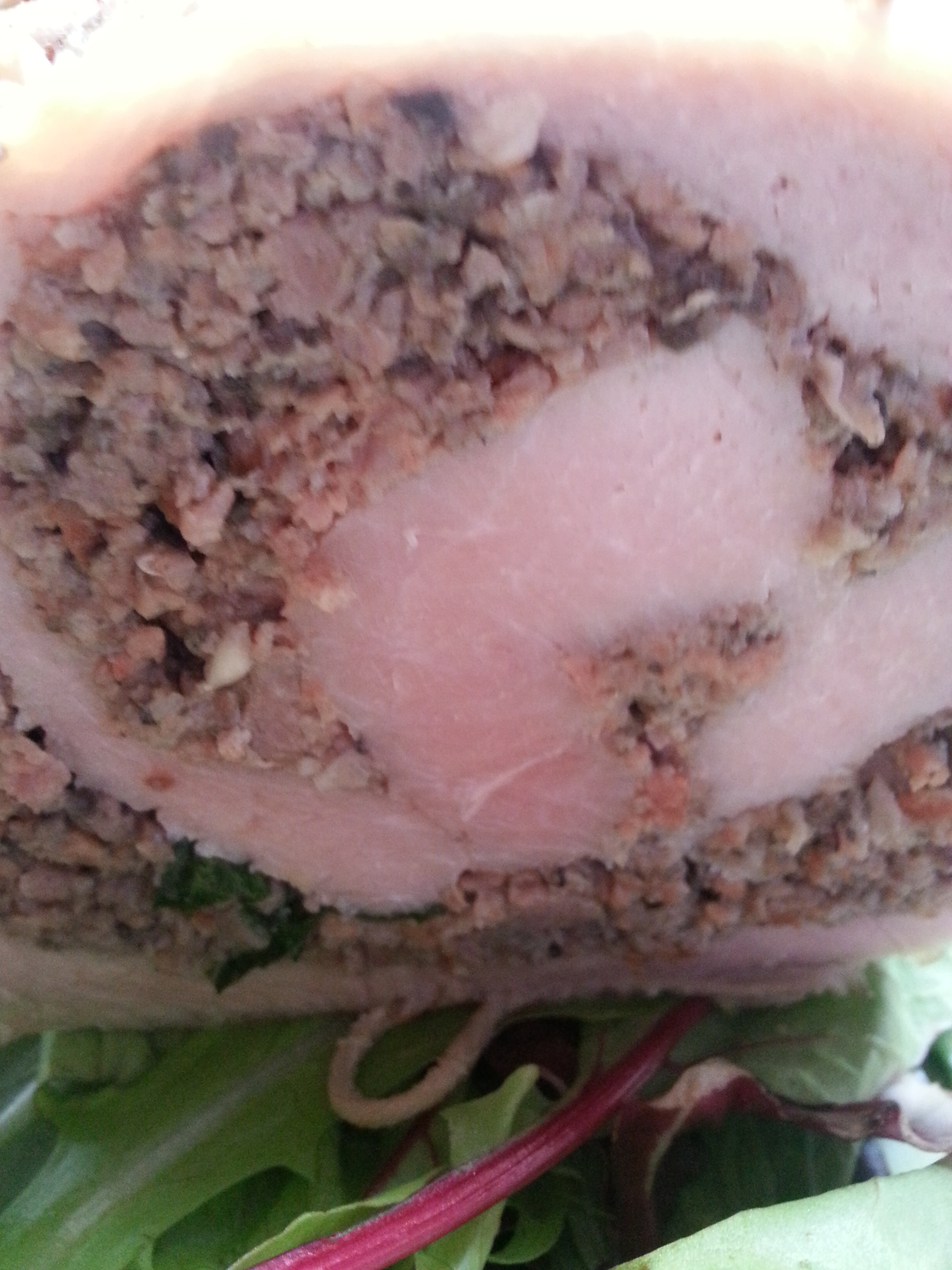
20131230_133630  The Integrity of the Immune System is critical to ones overall health. Zinc is a key mineral to assisting the function of the immune system. Found in a variety of protein based foods (meats and oysters), mushrooms, onions, garlic, orange vegetables, and orange fruits are rich in vitamin A and Zinc. Mushrooms cause the immune system to work more aggressively and should be included in a weekly dietary intake.  The following recipe can be served with beef, pork, or poultry. The meats may be filleted and layered with the puree, or roasted with the vegetables and herbs on the side.

Ingredients

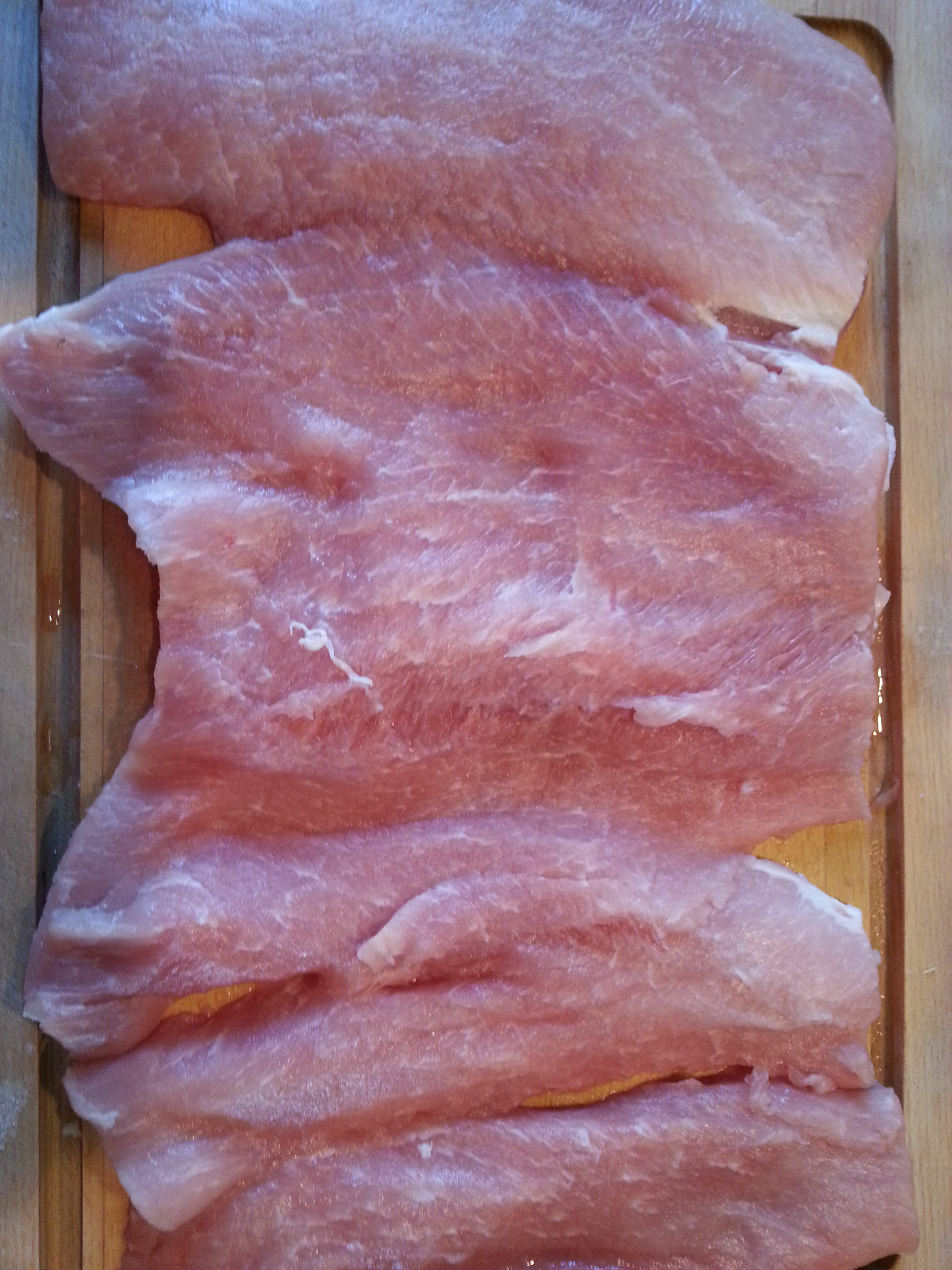
Make a cut length wise on pork at about 1/2 in from top. Continue to unroll meat with each length wise cut.

Make a cut length wise on pork at about 1/2 in from top. Continue to unroll meat with each length wise cut.

3 pound pork carefully filleted to extend the span of 18 inches.
3/4 cup sausage browned in skillet and drained
2 portabella mushrooms
1 garlic clove peeled
1/4 cup parsley
1/2 teaspoon dried Thyme
1/2 teaspoon salt
2 Tablespoons Olive Oil
1 Tablespoon Soy Sauce
String for tying meat
2 Tablespoons butter
1 cup fluid (water, or marsala or red wine.)

Directions:
Heat oven to 400 F

In a blender puree: sausage, mushrooms, garlic, parsley, thyme, salt, olive oil and soy sauce for about 20 seconds.
(IF CHOOSING NOT to fillet the meat, sear meat, place all ingredients into roasting pan.)
While lacing the meat to secure the meat is typically done, consider cutting 5 cutting strings at about 9 inches in length to utilize for encircling the meat and tying in knots.

Place puree into center of meat and roll the fillet. Encircle string around pork every 1-2 inches and tie a knot or lace the string.

With a spoon layer the puree mixture onto the center of the pork. Carefully begin to roll meat and pull inward as to tighten the meat roll. Either lace the meat or slide a string under the meat, encircle it and tie a knot, each knot will be about 1-2 inches apart.

Sear meat on stove top, turn on heat to high, place pan on burner. Wait for 1 minute. Add butter, once melted add meat roll and place meat in pan. Allow to brown on all 4 sides, about 2-3 minutes per side. Turn off heat and remove skillet from burner.

Place meat into a roasting pan add fluid. Cover with aluminum foil and allow to bake for 20 minutes per pound. Remove from oven and allow to sit for 10 minutes, place on a grooved cutting board and thinly slice the meat. May be served with roasted potatoes and saute asparagus.

By: Kim Crocker-Scardicchio