Pesto with optional Sunflower Seeds

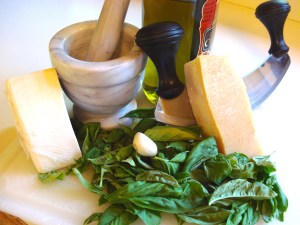
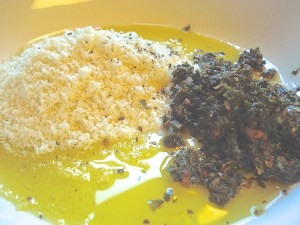
Simply ingredients for a delectable pesto sauce.

Freshly Chopped Basil carries over a summer flavor into early fall! Add Pesto to your favorite Pasta, Soup, use as a Sandwich Spread, added into a Cheese Ball, or on a baguette as an appetizer. Very easy to assemble and make; less than 10 minutes to prepare and enjoy!

Pesto will leave you wanting MORE! Serves 6 people.  This recipe allows for an Optional 1/4 cup of  Roasted Sunflower seeds, Pine Nuts, or Walnuts for a nuttier flavor.

LET’S BEGIN:  Fill pasta pan with water and place on burner set at high to boil.

Use a Food Processor for quickest preparation. Set to chop then blend. OR a cutting board with a half moon, OR mortar.

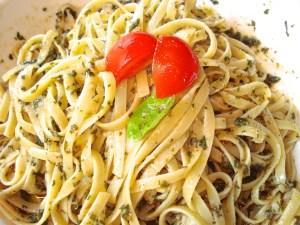
Homemade Pesto and Pasta

INGREDIENTS
2 cups Basil Leaves (Stores now sells containers or you can buy a plant. Remove and wash leaves.)
1 large single garlic clove
(optional 1/2 cup Pine Nuts or Walnuts)
1/2 -3/4 cup Olive Oil (Extra Virgin)
1/2 tsp salt and pepper
1/2 cup grated Parmesan Cheese
1/2 cup Pecorino Cheese
Extra Virgin Olive Oil to Drizzle over Pasta and Pesto
1 cup Parmesan Cheese to top off Pasta dishes.
A few small springs of basil set aside for presentation.

Finished Pesto

PREPARATION

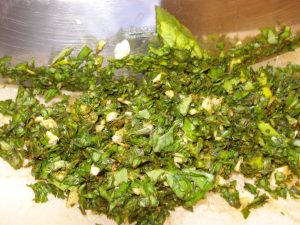
Freshly chopped herbs and garlic done by knife or half moon.

With Processer “Set to OFF” add basil leaves and garlic clove ( If opting to use nuts you may add them in at this point). Begin to “CHOP” leaves and garlic (nuts) for about 30 seconds. (Same for assembly with half moon or mortar.)

Set processor  to “PUREE” and through spout of machine slowly add HALF of olive oil. (If making by hand and incorporate cheese, spices and oil with a fork) Allow processor to work. Set oil aside. Add Salt and Pepper. Slowly add cheese, alternating with olive oil. Allow to BLEND together for about 1 minute. Set aside or cover and store in the refrigerator.

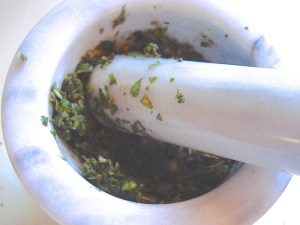
Pesto made with the mortar brings the oils from the herbs to the sauce.

Add pasta of choice to BOILING water. Add 2 Tbsp salt. Allow pasta to boil for 1 minute
less of indicated time. (If box indicates boil 8 minutes, then boil for 7 minutes to achieve “al dente” and allow pasta to “absorb pesto”.) Drain water from cooked pasta. Rinse pasta with cold water for 10 seconds; (RECOMMENDED RINSE ONLY for this pasta dish), so that the cheese in the pesto will not coagulate to the pasta.

Place pasta in a large serving dish.  Add prepared 1/2 cup Pesto for 4 individuals . With two forks toss pasta and pesto together until pasta is dressed in pesto. (Additional pesto for more flavor!)

Serve into individual dishes. Drizzle a small amount of Extra Virgin Olive Oil over pasta and top off with desired cheese. Place basil spring on top of prepared pasta for presentation.

By: Kimberly Crocker-Scardicchio

Hyper & Hypothyroidism and Nutritional Therapy

An ultra sound of the thyroid gland

Common expressions:   “I am so tired” and  “I feel cold”.  We can thank the small gland that’s wrapped around the trachea, our thyroid for various sensations. This small butterfly organ has 3 principle functions: cellular differentiation, growth and metabolism. Two key hormones (thyroxine) promotes the body’s growth & development and with help from the parathyroid gland, there’s bone formation and control of calcium in the blood (hormone calcitonin). The small double lobed gland claims to fame are also attributed to: sleep patterns, weight maintenance, moods, immune system, muscle agility and heart rate, etc.                                                                                     

While the thyroid is busy deciding how it will control the bodies energy, there may be an over production of the thyroid hormone (autoimmune disease or Graves Disease) it’s called Hyperthyroidism. Other causes linked to hyperthyroidism may be attributed to inflammation, nodules or tumors on the thyroid. You may notice an increased heat rate with exercise and excessive sweating with or without exercise.

There maybe a time  in it’s lifespan that the thyroid hormone output is reduced, called Hypothyroidism. Some of the initial symptoms are: weight gain with no change in diet or exercise, depression, and exhaustion.  The negative effects of untreated hypothyroidism are: increased cholesterol levels, strokes, cardio vascular disease and the immune system that turns on the body first attacking the thyroid itself (Hashimoto Disease). THE GOOD NEWS is that hypothyroidism is easily treated through daily medication.

Typical reference ranges for normal thyroids

Test From To Units
TSH 0.4 4.5 mU/L (milliunits per litre)
FT4 9.0 25.0 pmol/L (picomoles per litre)
FT3 3.5 7.8 pmol/L (picomoles per litre)

These ranges are only a guide. The reference range for FT4 in particular does currently vary between methods and so any ‘typical’ reference range quoted will be subject to method and local interpretation

Test results outside the reference range

  • high SH level with a low FT4 level: Hypothyroidism (under-active thyroid)
  • low TSH level with a high FT4 level and a high FT3 level: Hyperthyroidism (over-active thyroid)
  • Abnormal TSH levels together with normal FT4 levels indicate you may be at risk of developing a thyroid disorder
  • A low TSH levels together with a low FT4 levels can indicate a disorder of the pituitary gland

SYMPTOMS OF MALFUNCTIONING THYROID  can be noticed at any age and can even be misinterpreted as signs of aging;

Diagnosis. After a blood diagnosis, your doctor will prescribe a medication that you will take every morning, so that your thyroid wakes up in the morning with you, one hour after taking the medication you may eat. Within 2 weeks to 2 months, most symptoms will go away and your energy will return. The medication is something that you will take the rest or your life, a small price to pay for remaining healthy. “As of February 2010, at most laboratories in the U.S., the official “normal” reference range for the Thyroid Stimulating Hormone (TSH) blood test runs from approximately .5 to 4.5/5.0 according to the American Association of Clinical Endocrinologists.
MEDICATION INTAKE  will make a difference in homeostasis. The time of day that you take your “Synthroid” can influence how you feel, level of alertness, how you sleep and stability in weight. Studies performed show that medication taken at bedtime allows for proper absorption of the medication, without interference from nutritional minerals that could otherwise alter it’s function. Changing the time of day that you take your medication should be discussed with your Doctor.  For observation purposes they may have the switch made after a blood draw in order to better control the variables and achieve accurate documentation of the TSH (thyroid stimulating hormone).

NUTRIENTS

There are several nutrients that play key roles in the thyroid gland and the thyroid hormone function: zinc, copper, iodine, selenium and omega-3 fats. A multi-vitamin along with eating foods high in these minerals, is essential for normal thyroid hormone production and metabolism.

Dietary sources of zinc include: seafood, beef, oatmeal, chicken, liver, spinach, nuts and seeds.

Copper is mainly found in liver and other organ meats, eggs, yeast, beans, nuts and seeds.

Iodine is also an important building block for thyroid hormone.  Nutritional sources of iodine include sea fish, sea vegetables (kelp, dulse, hijiki, nori and kombu) and iodized salt.  Iodine is such a key component of thyroid health. 

FOODS TO LIMIT.  A high LDL Cholesterol number accompanied by a high Triglyceride number is linked to Insulin resistance, often noted with hypothyroidism. Foods that should be eliminated: white flour, white sugar, rice, pasta, bread, corn, potatoes (all types), cereal, desserts, dairy products, meat, citrus fruits. Caffeine, calcium should be consumed in limited amounts.   Goitrogen foods are also able to block iodine, therefore, utilization of these foods should be limited. They include:turnips, cabbage, broccoli, cauliflower, mustard, cassava root, soybeans, peanuts, pine nuts and millet, (peaches and strawberries may also interfere). Cooking, however, usually inactivates goitrogens.

BEST FOODS to promote metabolism: Sour fruits (kiwi, juice of fresh lemon), pears, apples, plums, fish, turkey, chicken, legumes and vegetables.

Selenium.  One of the best natural sources of selenium is Brazil Nuts. Selenium is an important mineral that contributes to the health of the thyroid. 1 ounce of nuts a day will benefit the small gland.

Omega-3 fatty acids will also contribute to normal thyroid function, which can be found in fish and fish oils, as well as vitamin A, which improves thyroid receptor binding and thyroid hormone activity.

Tyrosine, an amino acid and a precursor for making thyroid hormoneA deficiency of tyrosine or low protein diets can contribute to low thyroid function.  Check with your doctor if supplementation at a dose of 500-1,500 milligrams (mg) daily, which has therapeutic benefits, is needed.

Exercise. Daily exercise stimulates thyroid gland function and increases tissue sensitivity to thyroid hormone.  Try walking, biking, dancing at least 20 minutes a day.  However, walking 30 minutes twice a day, seems to encourage both the fuctionability of the thyroid and weight loss versus weight gain normally associated with hypothyroidism. While with hyperthyroidism an exercise regimen should be advised by a doctor in order to monitor a fast heart rate.

By Kimberly Crocker

References

Kidney Disease Low Phosphorus Diet

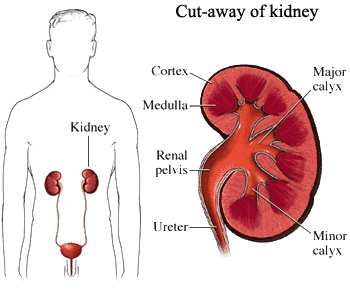
We are all provided with two equal fist sized organs, found in our lower back on either side of the spine just above the waist called Kidneys. Renal physiology is the study of kidney function, while nephrology is a medical specialty that focuses on kidney disease.

In brief, the kidneys perform multiple functions to sustain the life of the body, cleanse the body by removing waste and excess fluid through urine, provide a balance of water, salt, potassium, phosphorus and produce an active form of Vitamin D.  Multiple hormones and enzymes are produced in the kidneys and released into the body affecting the function of other organs, signaling red blood cell production, regulating blood pressure (Renin) and calcium metabolism.

The degradation of the kidneys can be influenced by a variety of factors. Having regular check-ups is key to kidney health. Do not miss doctor appointments if you have diabetes, high blood pressure, chronic urinary tract infection, bladder issues, chronic lower back pain. Any of all of these factors should be monitored an communicated in a timely manner.

   When kidneys begin to function improperly an individual may have any, or all of the following symptoms: nausea, vomiting, loss of appetite, fatigue and weakness, loss of energy, sleep problems, any change in output or color of urine, decreased mental awareness, muscle twitches or cramps, hiccups, swelling of feet or ankles, persistent itching, chest pains, shortness of breath, high blood pressure. Symptoms should be discussed with your Doctor. Early detection of kidney disease can be addressed, so that the health of the kidneys can be sustained.

A diet low in phosphorus, sodium and balanced protein is critical when addressing kidney disease. Listed below are foods allowed for patients facing kidney issues taken from DaVita who specializes in Renal Disease.  Four important points should be reviewed with your Doctor or Dietitian.

  • Foods Low in Phosphorus (less than 110 mg per serving)
  • Consume 800-1000 mg of phosphorous per day.
  • Portion Size is critical to staying in range of low phosphorus.
  • (A normal phosphorus blood level is 3.5 to 5.5 mg/dL)
Additional information on the kidneys can be reviewed at The National Kidney Foundation. Learn more about Renal Health, disease and locate professionals that can answer your questions.
By: Kimberly Crocker-Scardicchio
References
The National Kidney Foundation http://www.kidney.org/index.cfm
DaVita http://www.davita.com/
Webmd http://www.webmd.com/a-to-z-guides/understanding-kidney-disease-basic-information
Mayo Clinic http://www.mayoclinic.com/health/kidney-failure/DS00682

LOW PHOSPHORUS FOOD SERVINGS & mg/100g

Low-phosphorus meat and poultry choices
Fresh or frozen red meats without additives or enhancements are better choices (be sure to check ingredient labels; even fresh chicken and pork may be injected with phosphates and sodium) for a kidney diet.

** Choose meats without breading, marinades or sauce. On average, fresh meat contains 65 mg of phosphorus per ounce and 7 grams of protein per ounce. Check with your Doctor or Dietitian on serving size per meat. While most will say that 3 ounces is fine the following serving size has been modified to a 2 ounce serving size.

Phosphorus content for a 2-ounce portion, cooked:

Beef, pot roast: 104 mg Beef, sirloin steak: 126 mg
Chicken breast, skinless: 126  mg Chicken thigh, skinless: 100 mg
Hamburger patty 90% lean ground beef: 114 mg Lamb chop: 122 mg
Pork roast: 126 mg
Turkey breast meat, skinless: 122 mg Turkey thigh meat, skinless: 114 mg

 Low-phosphorus fish choices 

Fish is a high-quality protein that contains omega-3 fatty acids. Fatty saltwater fish such as salmon and tuna are highest in omega-3, reducing inflammation and protecting against heart disease and cancer.

Phosphorus content for a 2-ounce portion, cooked:

Mahi Mahi: 104 mg
Tuna, canned: 88 mg


Low-phosphorus seafood choices

Seafood is an excellent source of very low-fat, high-quality protein. However, there are differences in varieties of the same species. For example, Pacific oysters contain 50 mg more phosphorus in a 3-ounce serving compared to Eastern oysters.

Phosphorus content for a 3-ounce portion, cooked:

Shrimp: 120 mg
Oysters, Eastern: 120 mg
Snow crab: 120 mg

 Low-phosphorus breads

Bread is a good source of carbohydrates and calories needed by your body fo renergy production. While whole grain bread is a healthy source of fiber, it also has more phosphorus and potassium than white flour bread.

Phosphorus content for a 1-ounce portion, (usually one piece of bread):

Bagel, cinnamon raisin, blueberry, plain, onion, 1 ounce: 53-70 mg Corn tortilla, 6-inch: 75 mg
English muffin, 1 ounce: 52-76 mg Flat bread: 48 mg
Flour tortillas, made without baking powder: 20-37 mg French bread or rolls: 28 mg
Italian bread or rolls: 29 mg Light wheat bread: 38 mg
Pita bread, white: 58 mg Sourdough bread: 30 mg
White bread: 25 mg

 Low-phosphorus pasta and rice

Pasta, rice and other grains are a great source of carbohydrates, calories and B vitamins, plus zinc, copper and iron. For a kidney diet, whole grains like brown rice, oat bran and wild rice ARE LIMITED due to the higher phosphorus content. A half cup of brown rice has 75-81 mg of phosphorus which can add up if you eat a larger portion.

Phosphorus content for a 1/2 cup portion, cooked:

Couscous: 20 mg Egg noodles: 50-60 mg
Macaroni: 40 mg Pearled barley: 43 mg
Plain white rice, short, medium or long grain: 35 mg Rice noodles: 14-28 mg
Spaghetti: 42 mg

 Low-phosphorus dairy, dairy substitutes and egg whites

Milk and milk products are high in calcium and phosphorus, so finding an acceptable lower phosphorus substitute is a must. A half cup of milk (4 ounces) contains 111-138 mg of phosphorus. Some liquid dairy substitutes can be used in cooking to replace milk, but not all products are interchangeable. Read ingredient lists to look for phosphate additives in nondairy products. Some products are fortified with calcium-phosphate. Beware of the ones that promote “high in calcium” as these are also high in phosphorus. Eggs are a great protein source but also contain 95 mg phosphorus in a large egg. Remove the yolk and phosphorus is only 5 mg for each egg white.

Phosphorus content for a 1/2 cup portion, unless stated otherwise:

Almond milk, Almond Breeze®, original: 50 mg Nondairy creamer without phosphate additives: 40-53 mg
Nondairy whipped topping, 2 tablespoons: 0-10 mg Sherbet: 38 mg
Sour cream, 2 tablespoons: 20-40 mg Soy milk varies by brand: 50-125 mg
Unenriched rice milk without calcium-phosphate additives: 29 mg Egg whites, pasteurized 15 mg

 Low-phosphorus snacks

Crackers, cookies, candy, fruits or vegetables — all are appealing snack foods.There are many low-phosphorus choices for your kidney diet.

Apple, 1 medium: 10 mg Applesauce, 1/2 cup: 6 mg
Baby carrots, 9 pieces: 25 mg Biscotti, without chocolate or nuts, 1 ounce: 35-50 mg
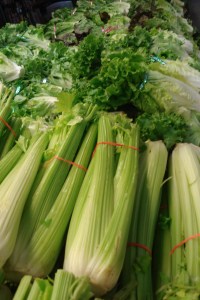
Blueberries, 1/2 cup: 9 mg Celery, 1 stalk: 10 mg
Cherries, 1/2 cup: 15 mg Fig bars, 2 bars: 10-25 mg
Fruit candies, hard candy, chews or gummy: 0 mg Fruit cocktail, 1/2 cup: 17 mg
Gelatin, without phosphate additives: 20-30 mg Low sodium crackers, 1 ounce: 20-35 mg
Peach, 1 medium: 10 mg Lemon Juice, 3 fluid ounces: 3.6 mg
Pineapple, fresh, 1/2 cup: 6 mg Radishes, 10: 9 mg
Shortbread cookies, 4 cookies: 17-35 mg Sorbet, 1/2 cup: 2-6 mg
Strawberries, fresh, 1/2 cup: 18 mg Unsalted popcorn, 1 cup: 8 mg
Unsalted pretzels, 1 ounce: 20-40 mg Vanilla wafers, 1 ounce = 5-8 cookies: 12-20 mg

 Lower phosphorus cheese choices

All cheese contains phosphorus with most having 120-250 mg per ounce; some contain more than 300 mg per ounce. The suggested portion for a dialysis diet is usually one ounce of cheese 1-2 times a week if phosphorus is controlled. Check with your dietitian for individual recommendations. Cream cheese-based spreads are much lower in phosphorus than cheese-based spreads. Portion control is key when it comes to cheese!

Low-phosphorus cheese choices:

Blue cheese, 1 ounce: 110 mg Cottage cheese, 1/4 cup: 92 mg
Cream cheese, 2 tablespoons: 20-40 mg Feta cheese, 1 ounce: 96 mg
Neufchatel cheese, 1 ounce: 39 mg Parmesan cheese, grated, 2 tablespoons: 72 mg

 Managing a low-phosphorus diet

Avoid dried fruits which are higher in phosphorus levels including: raisins, prunes, peaches, pears, dates, currants, bananas. Legumes should be reviewed with your dietitian, some are higher in phosphorus and may not be allowed.

FRUITS

Most fruits can be factored at 10 mg phosphorus per serving. Some fruits do not have any phosphorus. Fresh fruits with higher levels of phosphorus can be eaten in moderation. Weigh your food carefully to configure the amount of mg/100g.

GREAT CHOICE, No present phosphorous in fruit; Raspberries, Cherries, Grapefruit, Lychee, Apricots, Pineapple, Plum, Pumpkin

Banana 27 mg; Blackberries 27 mg; Kiwi 71 mg; strawberries 27mg; Tomato 63 mg; Watermelon 26 mg; Mango 23 mg; Orange 18 mg

VEGETABLES

GREAT CHOICE, No present phosphorus in vegetables: Brussel Sprouts, Chicory, Cucumber, Pickles, Leeks, Olives, Radish, Red Paprika,

Asparagus 49 mg: Artichoke 103 mg; Avocado 82 mg; Broccoli 46 mg; Baked Beans 132 mg; Cabbage 36 mg; Carrots 23 mg; Cauliflower 20 mg; Corn 79 mg; Green Beans 26 mg;  Green Peppers 14 mg; Mushrooms 36 mg; Onion 23 mg; Peas 187 mg; Potato 78 mg; Spinach 15 mg; Zucchini 7 mg; Lima Beans 178 mg;

If baking at home, explore substitutes in baking found at DeVita.com. Bakers Active Dry Yeast provides a good solution when baking.  Another TIP to adding levitation is to follow the recipe backwards, eliminate baking powder and salt. Beat the egg whites in a separate bowl until foamy, add a few grains of cream of tarter, beat another 10 seconds. Lastly, fold egg whites into the other ingredients.

Vegetable Couscous

Easy to make vegetable couscous. Serve with Lemon Leaf Chicken Wrap . Serves 4.      20 minutes preparation.

  • 2 cups water
  • 1/2 tsp salt for boiling water 1/2 tsp salt for vegetables
  • 1  cup Couscous
  • 1/4 c. olive oil
  • 1 pat butter
  • 1/4 onion peeled and diced
  • 1 garlic clove minced
  • 1/2 cup each; diced eggplant, zucchini, carrot, red pepper or tomato
  • 1 Tbsp chopped parsley
  • Basil leaves to garnish

Couscous alle verdure

couscous_verd_1_ric.jpg

Fill a  large pan with 270 ml (2 cups) water.  When water boils add 1/2 tsp of salt.  Add 1 cup (200 grams) of couscous. .
couscous_verd_2_ric.jpg

Stir couscous, reduce heat to medium low and cover,  allow to simmer for 2 minutes.   Place 2 tsp of butter into pan along with 1 Tbsp of olive oil.  Allow to simmer another 2 minutes.  Remove lid from pan, turn off heat and fluff couscous with fork.
couscous_verd_3_ric.jpg
Wash, dry and dice: eggplant, zucchini, carrot, onion and red pepper or tomato.
couscous_verd_4_ric.jpg

couscous_verd_5_ric.jpg

In a skillet on medium heat add 2 T olive oil, garlic and vegetables. Season with 1/2 tsp salt. Saute for 10 minutes. couscous_verd_6_ric.jpg
couscous_verd_mix2_ric.jpg

Combine vegetables and parsley leaves with couscous. Present with leaves of basil on side of dish.

OMG !!! & Other Popular Diets

A well written article by Emily Jupp on June 12, 2012 for The Independent, in which she  pursues the challenge of the OMG Diet and attentively documents her journey, discusses what the facts are, and her overall impression about this latest diet. Thank You Emily for allowing me to share your story!

“You’ve heard of Dukan, scoffed fat on Atkins, fainted from drinking only honey and lemon water and lost friends from the noxious side-effects of the cabbage diet. Now there’s a new one, this time designed to inspire jealousy and help you to “get skinnier than all your friends”. Six Weeks to OMG comes out in print next month. It has knocked the Dukan Diet off the top of the iTunes diet book chart and a subsidiary of Penguin has bought it for a seven-figure sum.

The book, by British sports scientist and personal trainer Paul Khanna, who goes by the pen name Venice A Fulton, offers controversial tips, such as skip breakfast, take cold baths and drink black coffee. But for short-term weight loss, can the OMG diet really help you shed pounds? Consultant Dietitian and Sports Nutritionist Linia Patel, Dr Christian Jessen, the presenter of the Bafta award-winning Embarrassing Bodies series, and the celebrity fitness trainer Jay Darrell Ingleton explain the science behind Fulton’s unconventional theories. I’ve also given Fulton’s tips a try, in a (highly unscientific) experiment, to see how tough they are to stick to.

Skip breakfast……What do I do for energy?

Fulton says skipping breakfast will help to stop you becoming a “fadult” (that’s a fat adult to you and me). “Breakfast is for wimps!”, he writes. He recommends exercising first thing in the morning on an empty stomach and then only eating once three hours have passed, so that your body is forced to burn stored fat rather than food.

The expert view: “Skipping breakfast is a weight-loss disaster,” says Patel. “When you wake up your body produces cortisol, a stress hormone that helps store fat. If you don’t eat, you are putting your body under more strain and stress and therefore more likely to gain weight around the middle. Also, you will want sugary and fatty things when you’re really hungry, which add to weight gain.”

My experience: I skipped breakfast and still had enough energy to run up the stairs on the underground (my “workout”). It didn’t affect my concentration and I ate breakfast at 10am. It was easy, but I consumed exactly the same amount that I usually eat, so I doubt it made much impact on my weight.

Drink black coffee before exercise

Fulton says the caffeine in a cup of black coffee will help to boost your exercise routine: “It’s nature’s cheap and secret potion,” he writes. But he warns against adding any milk or sugar to your drink, because “either would tell your body that food’s arriving,” which, in theory, will prevent it from burning its fat stores.

The expert view: Dr Christian Jessen says coffee can help, but there’s no secret trick to it. “After 12 hours or more of filming, mustering the energy to get to the gym can be hard,” he says. “Coffee gives me the energy to just about squeeze in a workout. It’s a stimulant and that’s what I use it for, but it doesn’t make your workout more efficient.” He also warns that liquids contain calories too. “People forget fluids such as the Starbucks coffee mocha creamy coffee thing can be high in calories. Adding milk and sugar to coffee will add to your intake. Remember your hard work in the gym is lessened by a highly calorific drink beforehand.”

My experience: It made me feel more energetic, which probably helped to psyche myself up for the gym.

Take cold baths….How Cold?

Fulton recommends taking baths of between 15C and 20C to “help you lose calories fast”. He says the cold boosts adrenaline, which he says is particularly good for burning the fat stored in women’s thighs.

The expert view: Ingleton says that a lot of athletes will take ice baths to help their muscles recover. “When athletes do it after a workout it gets blood to the muscles quicker. It has to be freezing otherwise it won’t work, but the author is not saying go to that extent. Also I don’t think everyone will be working out like a top body-builder. For normal people, it probably won’t make much difference to weight-loss.”

My experience: I opt for a cold shower, which is horrible. It feels like my body is in shock and makes my heart race. Afterwards, my skin looks bright and glowing and my clothes feel really warm, but the results don’t outweigh the awfulness. I couldn’t stick to it every day for six weeks.

OMG DIET says, “Eat less fruit” …..REALLY?                                                                                                                

Fulton says you should eat as little as one piece of fruit a day during the diet period, although after the six weeks are up he encourages more balance in your diet.

“Fruit can be a cheeky devil,” he says, because it contains fructose, which can turn to fat if it isn’t burnt off.

The expert view: “It’s all about calories,” says Patel. “We recommend you eat five pieces of fruit and veg a day, but if you want to lose weight have more vegetables than fruit, as fruit is more calorific. It’s ridiculous to just eat one piece of fruit a day for six weeks, because you’re losing out on essential vitamins and minerals.”

My experience: I replaced fruit with colourful salads and felt fine, but I missed having a late afternoon snack and bought a coffee loaded with honey instead of fruit – Fulton wouldn’t approve.

Swap Vegetables for Coke….. WHY?

Fulton says eating unhealthily in the short-term is OK if it makes you thin. “[For some people] to get skinny”, he writes,”it makes no difference whether they get their daily carbs from cans of Coke or from broccoli… for six to 12 weeks there’s no harm in using this knowledge to get super-skinny.”

The expert view: Patel says: “Broccoli is a fibrous carb that helps digestion and gives you nutrients. If you lay off fibrous carbs like bread, pasta and vegetables then you will be constipated with no energy.”

My experience: I’m far too fond of vegetables and regular bowel movements to attempt this one.

The Truth about Duelling diets

If you don’t like the sound of OMG, there are other diets that also promise fast weight-loss, but Dr Jessen warns that we shouldn’t expect miracles: “Coming off the diet and coming back to normal is when the weight can pile back on. Dieting should be about taking a healthy, sensible approach that will work in the long-term. Don’t try to cut everything out at once. Life is about enjoyment, too, and that’s why you work hard, so you can indulge in a cheeky cake in the afternoon if you fancy.”

The Headspace Diet:

10 Days to Finding Your Ideal Weight (Hodder & Stoughton). This is where you think deeply about every mouthful you eat and therefore, the theory goes, consume less.

“Being mindful while you eat is great, as most people tend to eat until they are stuffed,” Patel says. “It takes about 20 minutes for the stomach to signal to the brain its full – but most of us can polish off two platefuls in less than 10 minutes!” But she warns that this diet has its risks. “Eating a tiny portion each meal, you would risk not getting in enough nutrients to keep you healthy.”

The Baby Food Diet

This involves just eating jars of baby food in place of your normal, adult-size meals.

“Baby food is full of nutritious vitamins, which are easily digestible,” Ingleton says. But he warns it’s hard to feel satisfied with the lack of texture, and it’s easy to go over the three-to-four jar allowance and overeat.

The Raw Food Diet

“The raw food diet contains fewer trans fats and saturated fats than general Western diets and it can lead to weight loss and may give you more energy,” Ingleton says. He warns that there is a risk that the diet lacks some essential vitamins and fatty acids, so you would need to take vitamin supplements.

The Blood Group Diet

Devised by Peter J D’Adamo, this is when you cut out dairy, meat, wheat or grains depending on your blood type.

“There is no reasonable scientific basis for this,” Ingleton says. Patel agrees: “You risk getting an unbalanced diet if you are cutting out a whole food group.”

The Dukan Diet

Like the Atkins diet, the Dukan diet involves eating mostly protein for a few weeks and then gradually introducing other foods.

“It’s a high-protein diet, so while it might work for some to kick-start weight loss it won’t work for all, as it’s hard to cut out carbs,” Patel says. “You risk having low energy.””